• Home
  • About
    • Who We are
    • Affiliates
    • Disclosures & Guidelines
    • FAQs
    • Privacy Notice
  • Funding Your Travels
    • Banking on the Road
    • Credit Cards in Our Wallet
    • Spending
  • Contact
    • Media
    • Submission Guidelines
    • Partnership Opportunities

i should log off

log off and live!

  • Travel & Planning
    • Travel Reflections
      • Good, Bad & Ugly
      • Re-Entry
    • Travel Resources
      • Travel Tips
      • Travel Bloggers
    • Reviews
      • Gear
      • Operators
      • Travel Clothing
    • Travel Gear
      • Cameras
      • Danny’s Clothes
      • Electronics
      • Health & Hygiene
      • Jillian’s Clothes
      • General Gear
  • Destinations
    • Travel Guides
    • Africa
      • Egypt
      • Ethiopia
      • Lesotho
      • Kenya
      • Malawi
      • Morocco
      • Mozambique
      • Namibia
      • South Africa
      • Sudan
      • Swaziland
      • Tanzania
      • Uganda
      • Zimbabwe
    • Asia & Oceania
      • Armenia
      • Cambodia
      • China
      • Georgia
      • India
      • Kazakhstan
      • Laos
      • Thailand
      • Turkey
      • Uzbekistan
      • Vietnam
    • Caribbean
      • Antigua
      • Cuba
      • Jamaica
    • Central America
      • Belize
      • Costa Rica
      • Guatemala
      • Honduras
      • Nicaragua
      • Panama
    • Europe
      • Armenia
      • Austria
      • Belgium
      • Czech Republic
      • France
      • Georgia
      • Germany
      • Hungary
      • Italy
      • Spain
      • Turkey
    • North America
      • Canada
      • Mexico
      • USA
    • Middle East
      • Egypt
      • Israel
      • Jordan
      • Oman
      • Turkey
    • South America
      • Argentina
      • Brazil
      • Bolivia
      • Chile
      • Colombia
      • Ecuador
      • Peru
      • Uruguay
  • Weekend Adventures
    • Cycle
      • Pastimes
        • Beer & Wine
        • Books
        • Cooking
        • History & Culture
    • Dive & Snorkel
    • Hike
    • Trek
    • Whitewater
  • Photos
    • Photo of the Day
  • Family Travel
You are here: Home / 2010 / Archives for February 2010

Archives for February 2010

Foodie Friday- Cape Malay

February 26, 2010 By Jillian

Throughout South Africa we’ve been hearing about Cape Malay food, but never really understood what it was.  We knew where the cape is, but what is or where is Malay?  What is this cuisine you speak of?
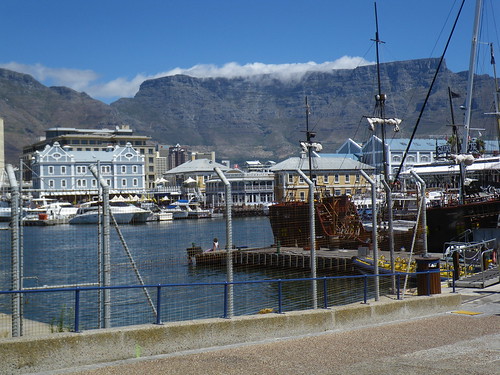
We went to the Capetown waterfront and asked the security guard the best place for Cape Malay food.  Pointing us in the right direction, we headed off to taste things which we couldn’t pronounce but wanted to try.  So I ordered a chicken curry rootie, unsure what rootie was, but figuring that anything with chicken was safe.  Danny opted for the babottie, a surprise for sure.  What came was delicious, and licking my plate clean so to speak, I was hungry for some more.

A blend of savory and spicy curries and meats cooked with dried fruit, Cape Malay cuisine represents Capetown- a blend of ethnic cuisines.   From curries to chilis to ginger, tumeric and cinnamon, Cape Malay cuisine is highly spiced and undoubtedly delicious. Cape Malay cuisine is descended from the Malaysian state prisoners that were sent to South Africa in the late 17th Century.  They brought with them their aromatic spices, culture and religion. Blending with the Dutch, English and Portuguese influence in Capetown, a distinct Cape Malay cooking style was created.

Filed Under: Africa, Cooking, Food, Headline, South Africa Tagged With: foodiefriday

Whirlwind tour of Namibia

February 25, 2010 By Jillian

My boss used to say, it was real and it was good but it wasn’t real good.  That was Namibia. Namibia is a beautiful country, but it was difficult. Unable to get money out of several ATM’s, we had visions of wandering through the desert without cash or petrol.   Not exactly a “real good” start.

Namibia is a incredibly striking country, from the arid desert of the south to the lush forests in the north.  We only had a short amount of time in Namibia so we skipped things like sand boarding, which we had done in Peru and Nicaragua and instead spent our time, soaking in natural hot springs in the desert, climbing 100m high red sand dunes for sunrise, and night time game spotting.

At 65 degrees Celsius, the natural hot springs at Ai-Ais were to hot to even put a full foot in, so instead we opted for the indoor hot springs where the water is pumped into jacuzzi’s and slightly cooler. The national park accommodations were gorgeous and resembled a spa, but something about paying almost $40 a night to camp there put a bad taste in our mouth.

The scene repeated itself over and over again throughout Namibia, incredible natural beauty, incredible price tag.  See what  I mean, real and good, just not real good. By the time we reached Etosha National Park, a park we’d heard phenomenal things about since arriving on the continent, we were wondering if it was all worth it on a trip like ours.

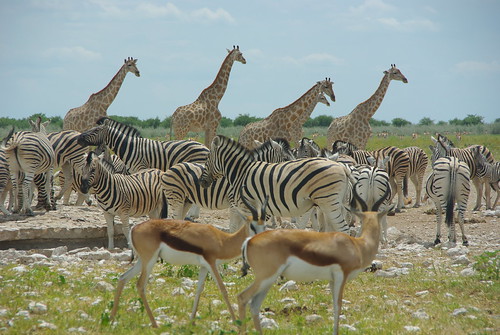
We’ve seen a lot of game, but we went to Etosha having not seen any leopards nor cheetah.  Driving through the park we felt completely alone and went nearly two hours without seeing another car, or anything besides Zebra and Impala.  Just as we were about to turn around and head to camp we spotted a lion walking across the road 100 feet from the car.  Pulling slowly closer, we saw two juveniles sitting in the shade next to the road.  We watched the three of them from about 20 feet away, until the lions, who could care less about the approach of our vehicle, raised up slowly and walked to a nearby watering hole.  Excited at the proximity of our encounter we clamored on about how happy we were until we spotted a male…sitting at the edge of the road.  He sat no further from our car than two or three feet. When we zoom in on his picture, we can actually see the reflection of our car in the lions eye.  Talk about incredible.  In the end we saw six lions resting in the shade, but none ever as close at the male.

Tipped off by another traveler to say at Halali Camp  for its floodlight watering hole, we pulled into camp having spent the rest of the afternoon searching for another close encounter.  That night honey badgers came through the camp.  One of the most feared and aggressive animals in Africa, no animal messes with a honey badger.  Fortunately they moved on, and we walked out to the watering hole around 10pm.  Hearing rustling, we stepped into the viewing area and immediately spotted a rhinoceros in the light.  A few minutes later her calf appeared quickly followed by another rmother and calf.  As they stood drinking, playing and eating, a leopard (our first sighting, finally completing the big five!) approached through the trees.  Annoyed at the cats presence, the mothers stomped and false charged at the leopard. No sooner did the rhinoceroses defend their territory did we hear something approaching from the darkness.  Standing at attention, the leopard decided it was time to disappear into the darkness.

Like a King arriving at court, a male elephant crashed through the trees.  Unhappy to find someone else at his watering hole, he chased the rhinoceroses away before drinking, splashing and eating to his hearts content.  We’ve seen elephants chase buffalo, zebra and ostrich from a watering hole, but never rhinoceroses.  Although the elephant succeeded in scaring off the leopard, the rhinoceroses hung in the shadows, waiting for his highness to leave.  After having his fill, the elephant meandered away, or so we thought.  The rhinoceroses, emerging from the darkness, cautiously approached the watering hole only to have the elephant come at them from behind.  Running back into the bush the rhinoceroses waited until the elephant was completely gone, which took quite some time, before one mother and calf reappeared.  In the end it was an incredible moment, best summed up by the Italian guy on the bench near us.  “Wow.” Couldn’t have said it better myself. By the time we left Etosha our list of sightings sounded like a “12 nights of Christmas song”, which to our pleasure included two leopards!

Etosha was definitely the highlight of our time in Namibia, and the country is certainly beautiful and interesting, but we never felt comfortable in Namibia.  People were friendly, but not warm, polite but not welcoming.  Granted we only spent a little less than a week in the entire country, so its really not fair to pass judgment, but we never felt that we were able to see and experience “real” Namibia.

Filed Under: Africa, Headline, Namibia Tagged With: animals, camping, safari, travel

Changing Perspective Through Experience

February 24, 2010 By Jillian

Through Central and South America my question to every hospedaje, hostel and hotel receptionist was “Tiene agua caliente?” (Do you have hot water?). More often than not the answer was “yes, but…” and I would find myself faced with the dreaded electric shower head. While I have heard that some find the electric shock of the electric shower to be a nice wake up in the morning, I hated it and complained loudly the first dozen times it happened. Well, perhaps more than just the first dozen. Traveling provides many new experiences, but perhaps more important than the electric shower-head, is the new perspective those experiences can bring. Things don’t seem so bad once you have something worse to compare it to or as good once you have something better. We’re often asked how did you like (insert famous structure/country/city here), and its hard to respond. “Well, where have you been before?” we often ask for it doesn’t matter what we think of it, it matters how we think it compares to the famous structure/country/city you’ve been to before.

In trying to make places relative, we say things like: “Rio de Janero is the love child of New York and Miami,” to an American or “Capetown is like the San Francisco of South Africa.” While this works for some people it won’t mean anything to you if you haven’t been to New York, Miami or San Francisco. When travelers refer to Buenos Aires as the Paris of South America I have to question- have you been to Paris? Because what I love most about Paris—the sidewalk cafes—are severely lacking in Buenos Aires. That is not to say that Buenos Aires isn’t incredible, because it certainly is, but it is not Paris in South America.

Managing expectations becomes a chore, and when we’re trying to size up whether its worth the time, money and effort to go somewhere we often read between the lines and try to figure out what new experience or perspective we’ll get from going there. Sometimes its as selfish as, I just want a few days on a cheap beach with cold beer (ok then we’re off to Mozambique), and other times its I’m looking for the real Africa (then we’re off to Lesotho). Not every travel experience is going to have a profound impact on you, let’s face it, the fifth time you’ve gone to a beach isn’t not life changing, but maybe the little recharge you get from being somewhere different, from meeting a new person, maybe that small experience changes your perspective and makes yesterdays problems seem small in comparison. So next time you’re frustrated at life, work or home, remember you don’t need to go around the world to change your perspective just a new experience.

Filed Under: Africa, Headline, South Africa Tagged With: cultural differences, travel

Capetown- the San Francisco of the South

February 23, 2010 By Danny

I don’t know if its called the San Francisco of the Southern Hemisphere, but if it isn’t and the name catches on, well you heard it here first. The winelands are close by. There is a famous prison in the bay. The vibe is cosmopolitan. The coast is wonderful but without a wetsuit you might find yourself a bit cold. Cape Town has the world’s largest population of Great White Sharks, followed by the waters off shore of San Fran. I suppose the biggest difference, on the surface anyway, is that San Francisco is dotted by huge hills whereas Cape Town is divided by a huge mountain. But, that’s just the surface I’m talking about.

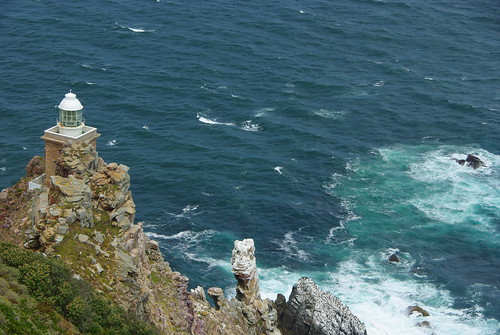
Cape Town was founded when Portuguese sailors 400 years ago were looking to go east and found Table Mountain instead. Eventually the need was realized for a couple of lighthouses on the point (the first one was too high and always shrouded in fog) and a permanent settlement was established, complete with wine courtesy of the Dutch. The need for cheap labor lead to slave imports (from Angola, Madagascar, and Asia) which is a large part of the reason Cape Town is so cosmopolitan today. Much of its own history, like that of the entire country, has been shaped by events in Europe as Capetown slipped from the Portuguese to the Dutch and then to the British.

The city is beautiful to look at but it is not without its blemishes. During Apartheid the government, as the story goes, couldn’t have things be so cosmopolitan and so they took to demolishing one of the most vibrant parts of the city, District 6. (If you’ve seen the movie District 9, currently up for best picture at the Oscars, you might notice some similarities.) Naturally District 6 was a poor area but it was a mixed area for coloreds, (that means mixed race here) blacks, Jews, whites, and you get the picture. With this area knocked out, as it still is today, people were force ably removed to the other side of the mountain where many continue to reside today in squatters camps and shanty towns. The glitz and glamor of the coastline condos to these camps could not be in greater contrast.

After spending a good day hiking up Table Mountain to look down on the city below, we realized the city does have a lot on offer: diving just offshore, hiking all over the place, and enjoying the best of waterfront nightlife. There are plenty of museums to keep you busy and it is has a real, walkable, downtown area which is not something we’ve seen since Buenos Aires. Between the funky boutiques lining Long Street and the Green Market Craft Square, the downtown is a nice mix of Africa and funky cosmopolitan. This town may remind me of San Fransisco, but while in SF I’ve never seen baboons or watch as street performers dance and sing zulu war songs while sipping my cheap, local wine.

Filed Under: Africa, Headline, Hike, South Africa Tagged With: cities, hiking, travel

Driving the not “right” side in South Africa

February 22, 2010 By Danny

Preparing to drive for the first time was more than a bit stressful. As I tested out all the controls to make sure I knew where they were, we had the following conversation:

D: Right, that’s the blinker, not the shifter.
(Car eased out of parking space in first, into the wrong lane.)
J: You’re on the right side.
D: So I am…..was that the wrong right or the right left?
J: Better practice using the blinkers.
(Wipers go on. Somehow we make it out of the parking lot. Approaching turn.)
J: Put on your blinker.
(Wipers go on again. Then wrong blinker.)
D: This is a left, that means its a short turn and I’m going to stay on this side of the street.
J: Good, you’re on the right side.
D: What (swerve) I’m on the left.
J: Left, that’s what I meant.
(Some time, and a few ostrich, pass.)
D: Shit, now its raining.
J: At least you know where the wipers are.
(Blinker goes on.)

And so it went, somehow we’ve survived a month of driving already and to be honest it has been a pleasure. Our car is little, so little in fact that it isn’t even sold in the US. With all four cylinders contributing to a massive 1.1L engine it struggles a bit on the big hills. Most of which are on one-lane highways. People here use the shoulders to allow others to pass. Although this is something we’ve seen everywhere we’ve been since Mexico, this is the first time I’ve actually driven in it and it is rather nice. If I scoot over for someone I can expect them to flash their hazards once they’ve passed me, saying ‘thank you’ and I am to respond with a flash of my high beams to say ‘you’re welcome.’ Oncoming cars will also scoot into the shoulder to allow more space in that imaginary center lane.

After 9 months through Latin America we only rented a vehicle once, and that was our final week with others doing the driving. It may seem surprising then that we’ve had our own set of wheels here in South Africa, driving on the left side of the road and all, for 6 weeks through 4 countries. The decision was a financial one, along the main route the car for two was cheaper than bus, which has allowed us to explore far more of the country while allowing us to camp and cook ourselves everywhere we’ve gone.

The thing I like the least about having the car is that, like the backpacks, our entire life is inside of it. The difference is that the backpacks are never left out of our sight in public whereas we frequently leave the car in public parking lots. Theft and vandalism here is such a problem that most parking lots have attendants in each lane to guard the cars…a service that you “optionally” pay for when you return to your car. We’ve seen this in other countries (Brazil, Argentina, etc) but needing to payoff the guard is something that still seems alien to us.

We’ve made it this far without a problem, driving through South Africa, Swaziland, Lesotho, and finally Namibia. Sometimes we find ourselves on the right (wrong) side of the road, and the wipers continue to make non-raining appearances, but otherwise we’re doing OK. The most amazing thing though, is when we’re approaching an intersection and Jill says “make a left at the light” and we both know that means to make a right.

Filed Under: Africa, Headline, South Africa Tagged With: cultural differences, driving, travel

  • 1
  • 2
  • 3
  • 4
  • Next Page »

Connect With Us

  • Email
  • Facebook
  • Flickr
  • Pinterest
  • RSS
  • Twitter

Featured Posts

Our Bucket List
How We Travel For Free
$ Travel Tips

Recent Comments

  • Barbara on Kayaking Kauai’s Na Pali Coast
  • Lori Hubbard on Review: Eneloop Batteries and Charger
  • TK on The Trouble with Philadelphia

Banking on the Road

It can be very hard to keep track of your finances while you're on the road long-term. Be sure to check out how we took care of our finances while traveling and feel free to email us any questions you have.

Adventure Guides

Torres Del Paine
China Adventure
Uzbekistan Overland
Egyptian Odyssey
Malaria
Argentina Adventure
DIY African Safari
South Africa Guide
Bolivia by Bus
How-To African Visas

[footer_backtotop]

Copyright 2008-2015 · All Rights Reserved · Contact I Should Log Off · RSS · Partner With Us · Privacy