• Home
  • About
    • Who We are
    • Affiliates
    • Disclosures & Guidelines
    • FAQs
    • Privacy Notice
  • Funding Your Travels
    • Banking on the Road
    • Credit Cards in Our Wallet
    • Spending
  • Contact
    • Media
    • Submission Guidelines
    • Partnership Opportunities

i should log off

log off and live!

  • Travel & Planning
    • Travel Reflections
      • Good, Bad & Ugly
      • Re-Entry
    • Travel Resources
      • Travel Tips
      • Travel Bloggers
    • Reviews
      • Gear
      • Operators
      • Travel Clothing
    • Travel Gear
      • Cameras
      • Danny’s Clothes
      • Electronics
      • Health & Hygiene
      • Jillian’s Clothes
      • General Gear
  • Destinations
    • Travel Guides
    • Africa
      • Egypt
      • Ethiopia
      • Lesotho
      • Kenya
      • Malawi
      • Morocco
      • Mozambique
      • Namibia
      • South Africa
      • Sudan
      • Swaziland
      • Tanzania
      • Uganda
      • Zimbabwe
    • Asia & Oceania
      • Armenia
      • Cambodia
      • China
      • Georgia
      • India
      • Kazakhstan
      • Laos
      • Thailand
      • Turkey
      • Uzbekistan
      • Vietnam
    • Caribbean
      • Antigua
      • Cuba
      • Jamaica
    • Central America
      • Belize
      • Costa Rica
      • Guatemala
      • Honduras
      • Nicaragua
      • Panama
    • Europe
      • Armenia
      • Austria
      • Belgium
      • Czech Republic
      • France
      • Georgia
      • Germany
      • Hungary
      • Italy
      • Spain
      • Turkey
    • North America
      • Canada
      • Mexico
      • USA
    • Middle East
      • Egypt
      • Israel
      • Jordan
      • Oman
      • Turkey
    • South America
      • Argentina
      • Brazil
      • Bolivia
      • Chile
      • Colombia
      • Ecuador
      • Peru
      • Uruguay
  • Weekend Adventures
    • Cycle
      • Pastimes
        • Beer & Wine
        • Books
        • Cooking
        • History & Culture
    • Dive & Snorkel
    • Hike
    • Trek
    • Whitewater
  • Photos
    • Photo of the Day
  • Family Travel
You are here: Home / 2010 / Archives for October 2010

Archives for October 2010

Foodie Friday: Szechuan Food

October 22, 2010 By Jillian

For me China has been a food paradise, but frankly we struggle just to order. It usually amounts to a middle-aged lady handing us a menu entirely in Chinese, Danny throwing up his hands and one of us walking into the kitchen or walking around the restaurant awkwardly inspecting other people’s dishes and pointing at them to order. The food is mostly delicious, but just as often it is oily and only semi-spicy. Finally we were at a breaking point and at a hostel we enlisted the help of a local. Asking her about a few popular dishes in America, our new Chinese friend replied to nearly each one- that’s from Szechuan. That’s from Szechuan. Thankfully our next stop in fact was Szechuan province.

IMGP6004Turns out she was right. We love spicy food, but it wasn’t until Szechuan, known for its bold flavors and peppers that we really had S-P-I-C-E. Heavy on the garlic and red chili peppers, you might know it as Kung Pao Chicken, Dan Dan Noodles, Twice cooked pork and the list goes on and on. I love Szechuan food and I ordered Gong Pao Ji Ding (Kung Pao Chicken) for dinner each of our first three nights there, mostly because I could actually order it in Chinese, but also because it’s my favorite dish. That was until my tongue went numb. Yup, that’s right. My tongue went numb.

I know, you’re thinking those chili peppers in China must be really powerful, but the secret is- it wasn’t the chili peppers. (Actually, the chili pepper comes from the Americas anyhow so they aren’t really all that different than what we have in Mexican food) Although I’ve had enough Kung Pao Chicken in my life to know that I prefer the 5 chili to the 3 chili at Chinese restaurants in America, but nothing could have prepared me for the Szechuan peppercorn. It’s not spicy, in fact its a little citrusy…but it numbs. Seriously, it numbs your tongue and mouth producing a weird tingly sensation in the middle of your meal. Locals believe it helps to balance the red chili peppers, but frankly I just can’t get used to the taste. From now on its Szechuan food all the way for me, but without the Szechuan peppercorn, thanks.

IF YOU GO: Szechuan food comes in many different varieties and although its probably best known for its spicy flavors, Szechuan cuisine also includes several preparations that aren’t spicy at all. As always in China, there is something for everyone. Chengdu is known for its hotpot, a fondue like dish whereby the diner “dips” vegetables and meats into a pot of really hot and spicy liquid. If you do it, watch the locals and by all means DO NOT drink the liquid.
Filed Under: Asia & Oceania, China, Food, Headline Tagged With: spices

Pandas: They actually move!

October 21, 2010 By Jillian

IMGP8145Having lived in DC for nearly a decade we were pretty spoiled when it came to a zoo. The National Zoo, free and easily accessible by public transportation, was an easy weekend (even weekday) get away in the city and to top it off, it had two adult giant pandas and their baby cub, Tai Shan. When little Tai Shan was born in 2005, the city went crazy and a 24 hr panda webcam was set up in his enclosure so you could watch every breathtakingly exciting minute of this first few weeks. Except that giant panda’s frankly, while cute, aren’t that interesting. They mostly just lay around and eat bamboo. I hardly ever saw the giant pandas at the national zoo run about, climb a tree or anything remotely that active.

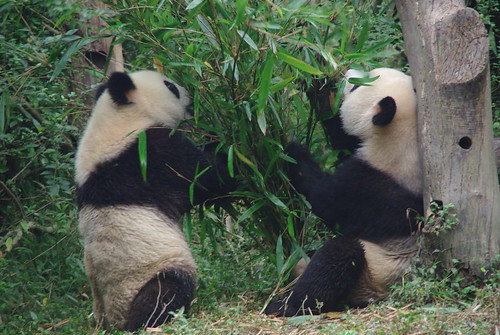
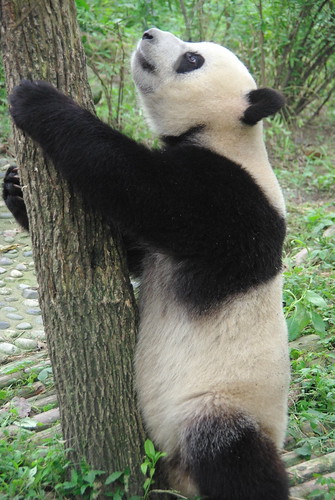
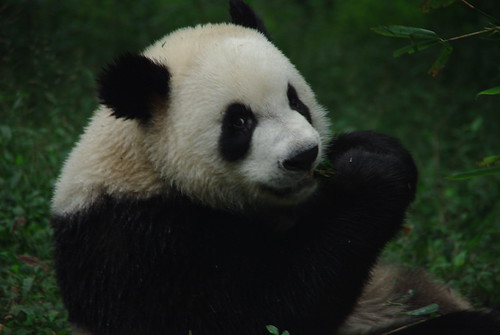
IMGP8120Then we arrived at Chengdu National Giant Panda Breeding Center in China. Let’s just say it was a different story. We arrived at 8am during the morning feeding time and these guys were moving. Climbing trees, exploring their enclosures, destroying bamboo as if the Chinese government had contracted them to clear the land for a new Olympic stadium…all in the name of breakfast. Each and every panda we saw was alert, active and reminiscent of our giant panda’s on steroids. We saw two climb up trees, where one promptly fell asleep. Typical!

The Chengdu National Breeding Center is remarkably successful at panda breeding and we actually saw four panda cubs in the center’s “nursery.” That certainly puts the national zoo to shame. Besides an adorable nursery of baby panda’s the center also has a dozen enclosures of other giant pandas as well as two for the less endangered red panda.

IMGP8113Besides the Giant Panda Center near Chengdu there is also Wolong Giant Panda Reserve, about 2.5 hours away. In February 2009, Tai Shan was moved from Washington, DC to Wolong, and although we toyed with the idea of paying him a visit, we didn’t get around to it. He’s quite a celebrity in China, Wolong maintains Tai Shan’s “blog” about his daily life and there are articles about his move, the trainers teaching him Chinese and how much the American people miss him. IMGP8253Unfortunately we can’t seem to link to the page outside of China, but if you do a search you might find it! He may lay around all day for all I know, but it looks like he’s in good hands!


IF YOU GO:
Although most hostels have tours (89-99rmb per person), we took a taxi one way to the center (about 30rmb from downtown) and took bus 902 (2rmb) back to town. The entrance fee is 58rmb (no student discount) and its highly advisable to get there before the morning feeding (usually around 9:30) when they are the most active. By the time we left around 10:15 am, they were already noticeably sleepier. The center opens at 7 am and was pretty busy by 9am. The earlier you arrive the better.

Filed Under: Asia & Oceania, China, Headline Tagged With: animals, nature_reserve

Tibet. Well, almost.

October 20, 2010 By Danny

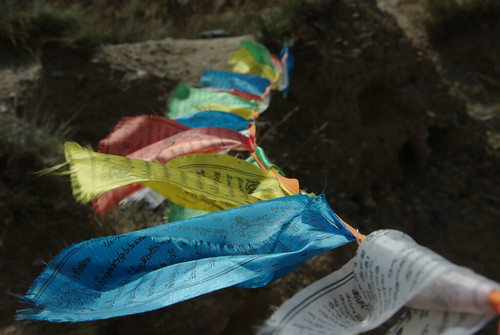
IMGP8041Monks and monasteries. Mountains filled with yaks. Red robes and strange customs. Brilliant colors, nonviolent conflict, and a man who calls himself Dali Lama. These are some of the things that come to mind when you hear the word: Tibet. How about this one, complete and control by their Chinese Headmasters.

It is easy to get caught with the glitz and glamor of Tibet…but that’s only if you’re lucky enough to go there. You see, it’s not just a matter of being able to afford the trip, it’s also a matter of obtaining Chinese approval to travel in the region, on a controlled (read: with a government minder) tour package, for a limited amount of time. Over the last two years the Chinese government has gotten increasingly more strict and made it more difficult to actually go to Tibet. The approval process usually takes several weeks, far longer than any trip will last. Thankfully for us though, Tibetan culture is not limited to Tibet.

IMGP7856The hills surrounding Tibet, especially to the east of Tibet, are filled with Tibetan peoples, monks, monasteries and culture. We chose the town of Xiahe to begin our journey and as we boarded the bus from a very large Chinese city, we shared it monks wearing their robes…which incidentally include cell phone pockets. In a few short hours we were transported from the hustle and bustle of the Langhzou metropolis to the slow and deliberate speed of Tibet, one of the most mythical places remaining on the planet.

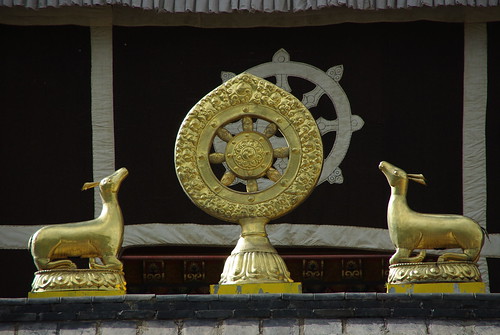
The next morning we began touring the Labrang Monastery. Our tour took us through the various buildings of the Monastery which were all being used for various types of training ranging from medicine to spiritual. The insides (not photos allowed) all held giant Buddha sculptures and the walls were often lined with little cubbyholes holding ancient texts. One held several small sculptures made of yak butter and we were allowed to take a photo of those.

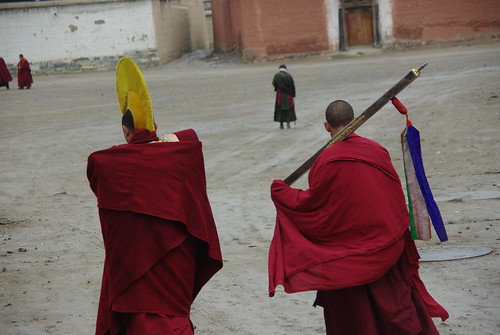
IMGP7728We walked through building and building, watching as monks, sitting on the floor with crossed legs, took their second of two meals of the day at noon. Many others sat in rows busy with prayers and study. When the lead monk walked past at one point, wearing his yellow mohawk hat, our guide ran and hid as part of his display of respect…my understanding was that to be respectful was not to get in the way. We later saw the lead monk blowing some kind of ritual horn from atop one of the buildings.

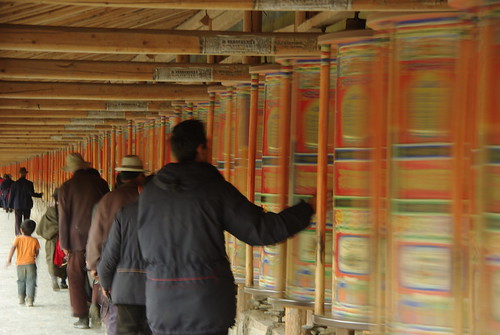
IMGP7786Later in the day we took a walk along the Pilgrim’s Walk. This monastery, like many, is a site of pilgrimage and Tibetans travel here from all over to literally, walk around it. As they walk around the monastery (each monastery we saw had this) they spin prayer wheels which literally line the outer walls of the monastery. At certain points they prostrate themselves on the ground, getting down on their stomachs in prayer. This particular Pilgrim’s Walk was 3km long and people will walk it, all day long. Once was enough for us but watching the monastery from above (the entire complex was built into the surrounding hills) was spectacular as we were able to see monks in a series of ritualistic dances and chants while making offerings.

IMGP7833Over the ensuing several days, we visited several monasteries like this one, usually smaller though, and met many monks who were very happy to shake our hands and practice their English. We were also privileged and lucky enough to be taken down into a very deep and dark cave—where some tourists have been known to plunge to their deaths—to visit a Tibetan holy place. We were shown through art galleries by and dined in restaurants alongside the very monks we had come to meet. Most telling though, was when the Chinese government sent at least 12 billy-club wielding Han police officers to collect some paperwork at our hostel…the work of one. Clearly the government, in the process of building many new roads so they can better ferry additional forces to the area, is interested in more than just learning about Tibetan culture.

IF YOU GO: The bus ride to Xiahe from Langzou is only a few hours long, thanks to the new roads that have been installed. We stayed at the new Youth Hostel, just off the main street, which is both cheap
and comfortable. The town itself, due to elevation, is very cold so bring plenty of warm clothes. Seeking out others to join you for a tour of the surrounding areas (specifically the nearby caves) and be sure to visit the monastery in the morning as it is far more active. Beware, the hot springs in the area are not very hot.

Filed Under: Asia & Oceania, China, Headline, History & Culture Tagged With: caves, religion

Photo Tuesday: Money so worthless you could…

October 19, 2010 By Jillian

The Beitbridge border between South Africa and Zimbabwe is one of the busiest in the world.  Due to the huge influx of refugees from Zimbabwe, the South African government has set up, with the help of several multi-national aid organizations, a refugee camp near the border.  Waiting for the rest of our bus to be processed by South African immigration, I headed to the ladies room.  Opening the stall door I couldn’t believe my eyes at seeing this sign.  Disbelieve turned into horror when I contemplated how dire the economic situation must have been for people to use zimbabwean currency as toilet paper.

Filed Under: photos Tagged With: border post, currency, photos, toilet, zimbabwe

Budget Report: The Silk Road

October 18, 2010 By Danny

The fabled silk road.  We completed Istanbul to China, our last great overland adventure of this trip.  Traveling our modified silk road proved to be far more expensive than we thought it would be. Visas ate up a huge amount of our budget (about $10/day between us), but there’s really no way around that.  Turkey was every bit as expensive as any place we ever went in Europe. Add to that the transportation challenges we faced and these rather cheap countries ended up being quite expensive. To see our spending for the entire trip visit our RTW budget page or if you’re interested in finding out how to save and budget for a trip around the world, check out our other finance pages.

Country Days Food Lodging Activity Trans Misc* Daily Avg
MEX & C. AMR.
111 $17.76 $10.33 $23.31 $20.50 $9.96 $79.25
SOUTH AMERICA 135 $15.68 $10.21 $19.71 $31.73 $9.42 $86.75
AFRICA & LEVANT
174 $16.44 $12.09 $39.90 $36.35 $19.84 $124.63
EUROPE
32 $21.93 $6.26 $11.94 $40.22 $9.54 $90.01
Silk Road
50 $16.46 $17.96 $19.50 $29.01 $19.40 $102.33
Turkey
23 $19.22 $16.11 $35.97 $23.95 $7.83 $103.09
Georgia 9 $13.94 $28.56 $5.71 $10.00 $17.77 $75.98
Armenia 5
$13.59
$14.73 $5.97
$7.01
$5.68
$46.98
Uzbekistan 8
$7.19
$16.25
$5.76
$16.97
$53.59
$99.75
Kazakhstan
5 $25.95 $13.30
$4.07
$30.31
$29.43
$103.06

TURKEY: Despite the high price Turkey comes with, we allowed ourselves to have a very nice time there. Springing for a small cruise drove our activity budget up but helped to bring everything else down as the tour was all inclusive. Overnight buses were expensive for transportation but those, combined with couchsurfing in both Istanbul and Trabzon helped to keep lodging down. Actually, hostels in many parts of Turkey were over $30 for the two of us, more than many places in Europe, and we spent most nights in dorm rooms.

GEORGIA and ARMENIA: Both of these countries are quite cheap and represent a great value while traveling there. The biggest difference between the two with regard to our budget was that we were able to couchsurf while in Yerevan, Armenia and didn’t buy the same amount of Soviet era souvenirs in Armenia (Misc. Budget) that we purchased in Georgia. Both countries use alternative (read: cheap and dangerous) fuels for cars meaning that transportation is surprisingly cheap and spending time hiking is always easy on the budget. Our biggest expense in the whole region was our lodging in Tbilisi, Georgia.

UZBEKISTAN: The country itself is one of the cheapest we’ve been to. There were always just enough choices for lodging to keep prices below the $20 mark for a night and food and transportation were both quite inexpensive. The obvious big budget item were our visas, costing us nearly $200 each. Had we stayed a couple of days longer and moved a touch slower our numbers here would look quite different but as it was we didn’t move particularly fast. We’d been told by several people that a week would be plenty of time to see the sights and that was quite accurate. Spending additional time in the countryside with locals is difficult on account of government restrictions.

KAZAKHSTAN: The home of Borat is not so poor after all. There is a natural resources bonanza taking this country by storm and many of its cities are quite pricey. That being said, we really only used Kazakhstan as a transit country for getting into and out of Uzbekistan and our lack of lingering pushed our cost per day up quite a bit. With two overnight trains and one night couchsurfing, we only paid to sleep 2 of our 5 nights, but this meant our transport was quite expensive. Food was the big shocker here, but like I said, it’s not such a cheap place. The multi-entry visa cost us $60 each, plus shipping fees, accounted nearly all of our miscellaneous spending for the country.

NOTE: Our flight over the Caspian Sea, from Armenia to Kazakhstan, are not applied to any single country, instead that cost is only included in the transportation totals for the Silk Road leg of the trip.

Filed Under: Asia & Oceania, Europe, Headline, Middle East, Travel & Planning Tagged With: budget, Travel & Planning

  • « Previous Page
  • 1
  • 2
  • 3
  • 4
  • 5
  • Next Page »

Connect With Us

  • Email
  • Facebook
  • Flickr
  • Pinterest
  • RSS
  • Twitter

Featured Posts

Our Bucket List
How We Travel For Free
$ Travel Tips

Recent Comments

  • Barbara on Kayaking Kauai’s Na Pali Coast
  • Lori Hubbard on Review: Eneloop Batteries and Charger
  • TK on The Trouble with Philadelphia

Banking on the Road

It can be very hard to keep track of your finances while you're on the road long-term. Be sure to check out how we took care of our finances while traveling and feel free to email us any questions you have.

Adventure Guides

Torres Del Paine
China Adventure
Uzbekistan Overland
Egyptian Odyssey
Malaria
Argentina Adventure
DIY African Safari
South Africa Guide
Bolivia by Bus
How-To African Visas

[footer_backtotop]

Copyright 2008-2015 · All Rights Reserved · Contact I Should Log Off · RSS · Partner With Us · Privacy