• Home
  • About
    • Who We are
    • Affiliates
    • Disclosures & Guidelines
    • FAQs
    • Privacy Notice
  • Funding Your Travels
    • Banking on the Road
    • Credit Cards in Our Wallet
    • Spending
  • Contact
    • Media
    • Submission Guidelines
    • Partnership Opportunities

i should log off

log off and live!

  • Travel & Planning
    • Travel Reflections
      • Good, Bad & Ugly
      • Re-Entry
    • Travel Resources
      • Travel Tips
      • Travel Bloggers
    • Reviews
      • Gear
      • Operators
      • Travel Clothing
    • Travel Gear
      • Cameras
      • Danny’s Clothes
      • Electronics
      • Health & Hygiene
      • Jillian’s Clothes
      • General Gear
  • Destinations
    • Travel Guides
    • Africa
      • Egypt
      • Ethiopia
      • Lesotho
      • Kenya
      • Malawi
      • Morocco
      • Mozambique
      • Namibia
      • South Africa
      • Sudan
      • Swaziland
      • Tanzania
      • Uganda
      • Zimbabwe
    • Asia & Oceania
      • Armenia
      • Cambodia
      • China
      • Georgia
      • India
      • Kazakhstan
      • Laos
      • Thailand
      • Turkey
      • Uzbekistan
      • Vietnam
    • Caribbean
      • Antigua
      • Cuba
      • Jamaica
    • Central America
      • Belize
      • Costa Rica
      • Guatemala
      • Honduras
      • Nicaragua
      • Panama
    • Europe
      • Armenia
      • Austria
      • Belgium
      • Czech Republic
      • France
      • Georgia
      • Germany
      • Hungary
      • Italy
      • Spain
      • Turkey
    • North America
      • Canada
      • Mexico
      • USA
    • Middle East
      • Egypt
      • Israel
      • Jordan
      • Oman
      • Turkey
    • South America
      • Argentina
      • Brazil
      • Bolivia
      • Chile
      • Colombia
      • Ecuador
      • Peru
      • Uruguay
  • Weekend Adventures
    • Cycle
      • Pastimes
        • Beer & Wine
        • Books
        • Cooking
        • History & Culture
    • Dive & Snorkel
    • Hike
    • Trek
    • Whitewater
  • Photos
    • Photo of the Day
  • Family Travel
You are here: Home / Archives for museums

Photo: Search for El Dorado

May 26, 2011 By Jillian

This is probably the most famous piece in Bogotá‘s Museo del Oro (Gold Museum).  It is a stunning miniature scene depicting the Musica’s El Dorado ceremony, when the new chief assumed his powers.  The ceremony involved him painting himself with gold dust and dumping gold and jewels into a highland lake as an offering to his god.   As you can imagine it fed the myth of El Dorado, the city of gold, and hundreds of Spaniards were taken with searching for this mythical place.

In the end, the gold of the Musica people fed the Spaniards desire for the Americas.  By the 1540s the gold hungry Spaniards were searching feverishly for gold deposits.    Sure they found some, but most of it was used by the indegenous people for religious reasons, not for wealth.

The Museo del Oro has an amazing collection of over 55,000 gold pieces.  The goldsmith abilities of the indigenous peoples are incredible, we saw varieties of knives, figurines and statues depicting gods in addition to various ritual items and masks.  The museums collection is breathtakingly stunning and although we loved Colombia for it’s culture and people, this museum was one of our favorites on the entire continent.  Believe me, you’ve never seen craftsmanship like this in gold.  It’s certainly worth the trip to Bogota!

To see more of our favorite photos from around the world check out our travel photo page. Let us know your favorites and we’ll include them in our photo of the day series.  Colombia was one of our favorite countries on our trip, one that surprised us in only pleasant ways.  You can read more about our travels in Colombia.   The northern coast around Cartagena would be a great place to look for late deal holidays!
Filed Under: photos Tagged With: gold, museums

Josef Stalin is not who you think he is…

September 16, 2010 By Danny

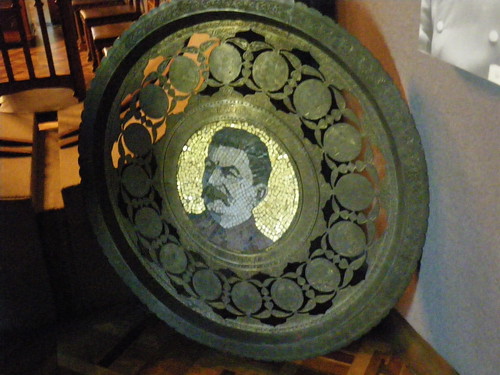
IMGP5882When you hear the name ‘Stalin’ what comes to mind? Steel. Soviet. Dictator. Evil Man. Iron Curtain. Red Scare. Big Mustache. Nazi Killer. Follower of Lenin. Communism. Roosevelt’s Russian Friend. Not Russian?

That’s right. “The Great Architect of Communism” is not Russian, he is Georgian.

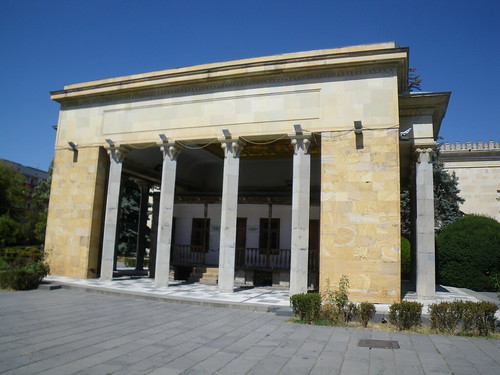
We visited Gori, a town about 90 minutes to the west of Tbilisi, to see the his old home and the museum erected in his honor. We were astonished. His old neighborhood was bulldozed so that only his home, which he lived in until the age of 4, was the only house left standing on the city block, allowing for a whole Stalin park. His father was a cobbler.

IMGP5878Ironically when “The Father of Nations” lived here, his name was Joseb Besarionis dze Jugashvili. He changed his name to Stalin (Steel) much later when he needed a pen name for his communist writings. He rose up through the communist party over the years, being deemed unfit for military service due to his deformed hand; his face scarred with small pox didn’t help either.

The museum though, focuses on these things as something of a hero-worship to “Humanity’s Brilliant Genius”. It somehow manages to ignore all the painfully evil things he did to maintain control within the Communist Party and the broader Soviet system; pacts with Hitler, various famines, the sending of people to the Gulags, etc. IMGP5877The guide did talk about the open disagreements between Lenin and S

Filed Under: Europe, Georgia, Headline, History & Culture Tagged With: history, leaders, museums

Berlin: Something’s different here.

June 17, 2010 By Jillian

We landed in Berlin bleary eyed after getting up at 2 o’clock in the morning for our flight. (Danny never went to sleep) and immediately something was different. No less than 10 minutes after getting off the plane, we stood in line to buy train tickets, customs and immigration completed, luggage in hand. Right on schedule the train appeared, opened it’s doors and we were whisked away to the center of Berlin. It worked like clockwork. “German efficiency, welcome to Europe,” I thought.

There’s a lot to see and do in Berlin, but first on our list was actually the Egyptian museum. Crazy, I know, considering it has been two weeks since we stood in the Egypt Museum in Cairo. Of course we wanted to see Nefertiti’s head after reading the rather belligerent request for it to be returned on a billboard in the museum in Cairo. For the record, her head was very nice, but not nearly as incredible as we had hoped. In the Sudan we slept under the stars next to the pyramids of Meroe, almost all of which have been destroyed by an Itialian fortune hunter in the 19th Century. Taking the gold jewelry and treasure back to Europe, we assumed while at the pyramids that it had been sold and lost to history. You can imagine my surprise and frankly excitement when I stumbled upon her treasures in this museum. Like a kid in a candy shop I examined every piece with such excitement that I think I scared the guy next to me.

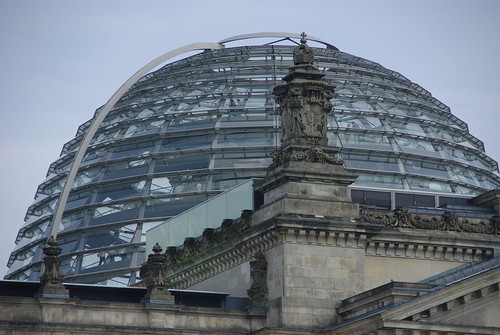
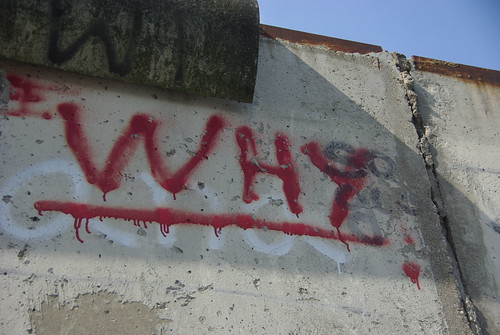
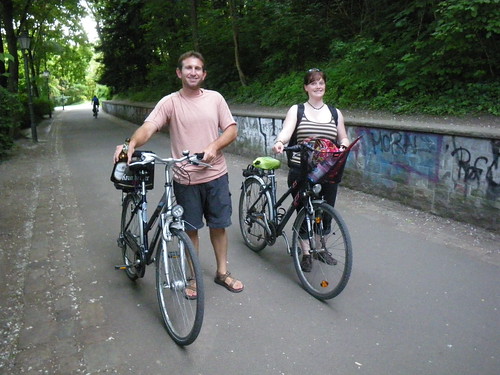
Honestly we spent most our time in Berlin at the museums, given that there are more than 70 of them and both of us are history buffs isn’t too hard to understand. We saw Checkpoint Charlie, remaining sections of the Berlin Wall, road our bikes around the Bradenburg Gate, the German History museum, the site where the Nazi’s famously burned books, and spent nearly three hours exploring the Isalmic Art museum in the Pergamon. By the time we left we were museum-ed out.

Besides the more traditional museums, we also spent a lot of time at museums and sites dedicated to World War II. As Americans it was interesting to see the scholarship and academic work on World War II from a German perspective.

Having hosted, traveled and met several German’s along the way, we were not surprised at the frank and sometimes painful displays related to World War II and the Holocaust. We found the Topography of Terror Museum, on the site of the old SS headquarters in Berlin to be particularly interesting for the displays told a complete history of the SS’s actions during the era with facts and images that we had never seen. We appreciated that the Jewish Museum didn’t focus only on the Holocaust when telling the story of Jew’s in Germany, instead providing a chronological history since the medieval period. We ended our visit to Berlin at the Holocaust memorial located symbolically near the Bradenburg Gate.

Somewhere in there we had time to grab a pretzel, a few beers and cycle all over Berlin. In fact the couchsurfers we stayed with kept us out late each night, not that we’re complaining, beer tasting in the park, barbecuing with friends, playing cards and having some rather deep political conversations. We thought Europe would be a relaxing break for us, but if Berlin is any indication we’re going to be exhausted by the time we leave this continent.

Filed Under: Beer & Wine, Cycle, Europe, Germany, Headline Tagged With: cities, culture, museums

Mummies, Pyramids and Margarita’s

June 3, 2010 By Jillian

Arriving in Cairo after two long days in the car, we were excited to check into our hotel and grab a drink. A long time ago a fellow blogger told us there was a Chili’s in Cairo and frankly we’ve been dreaming of nothing but a big serving of chips and salsa and an almost-the-size-of-your-head margarita ever since then. It was a schlep into Cairo but the whole time we kept saying, margarita’s tonight! Sitting down to order we looked at the drink menu: slushies, not margarita’s. We were devastated. No margarita’s at Chili’s? Consoling ourselves in fajitas and copious amounts of salsa, the four of us celebrated our arrive to Cairo with some “Jani Water: Red Lion” rum, which as you can imagine was rather unpleasant.

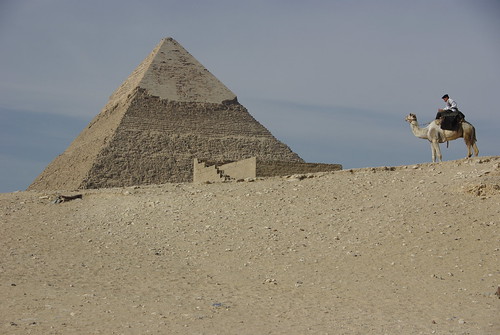
We’ve seen tons of pyramids and temples, but truly the pyramids of Giza are spectacular. As with nearly everything in Egypt, the sheer size of the pyramids is what is most amazing. Although we got to the pyramids early, they were packed with tours so we took the requisite pictures and went straight to the back. Fortunately most tourists stay between the first two pyramids so we had the third all to ourselves. We didn’t pay the extra fee to go climbing in the pyramids, having been advised against it by several travelers, so I can’t tell you what its like to be inside a pyramid, but from the outside I would imagine its rather claustrophobic! Near to the pyramids is the famous sphinx, which sits almost guarding the towering sites. Since it was early though, we passed on the trip to the Pizza Hut across the street where the views of the Sphinx are the best available.

We spent hours at the rather ill designed and laid out Egyptian museum scoping out the treasures of Tutankhamen and more sarcophagus’ than you can shake a stick at. The museum feels more like a cultural warehouse, the hundreds of thousands of artifacts are jammed on shelves mostly without description or explanation. A fascinating exhibit on stolen treasures and destroyed archaeological sites, some destroyed as late as 2004, made us appreciate the problem of conservation and protection. Just an hour in the museum made us realize how Egyptology can be its own discipline.

Cairo itself is chaotic and vibrant and surprisingly hopping late at night. Crossing the street is a bit like playing frogger- you move quickly from lane to lane waiting for a brief break in traffic before jumpingto the next one! Until well after midnight families roam the streets enjoying coffee, ice cream and plenty of window shopping. Lit up like Las Vegas, the main streets are incredibly loud, but we loved being in the city again. Wandering the Khan al Kalili market and getting past the tourist area, we loved the constant commerce around us. Vendors selling spices, jewelry, clothing, shoes, fabrics, no one yelling at us as tourists, rather just shouting at the crowd of customers. Thousands of shops and stalls sold everything from accessories to spices and toys. Being a Muslim country, you can imagine our surprise at the numerous risqué lingerie shops that also lined the streets of central Cairo. Makes you wonder what’s under that chador!

We loved Cairo and would be happy to return to its chaos and color someday. Ultimately Cairo was a sad experience for us as we had to say goodbye to Ali and Campbell who continued on to Alexandria for a ferry to Italy while we continued East to the Sinai. Traveling with them continuously since Nairobi, it was hard to say goodbye to them and be on our own again. We’ll miss Campbell’s comments, Ali’s TIA logic and the trials and tribulations of taking Kaspuurr through the desert or up a mountain. Hopefully it won’t be the last time we travel together!

IF YOU GO: Cairo is a chaotic, amazing, vibrant city, in fact the largest in Africa.  Do see the Egyptian Museum and the Pyramids of Giza, but also explore the markets and neighborhoods, which are very rewarding. We went to the pyramids first thing in the morning and took an inexpensive taxi straight there. The Khan al Kalili market is enormous, we went in the evening and snagged some great deals from the vendors.  Remember to keep a sense of humor when negotiating and  don’t feel obligated to buy even if you are invited for tea. Remember that the price if always negotiable especially with a smile and some basic arabic.  Negotiating is part of the game.  Street food in Cairo is plentiful and delicious though be weary of tourists prices and refuse to pay them.

Filed Under: Africa, Egypt, Headline, History & Culture, Middle East Tagged With: capitals, drinking, museums, ruins

Apartheid

December 30, 2009 By Jillian

To say apartheid was segregation is an understatement. A state-sponsored policy until 1994, apartheid impacted the lives of every South African, black, white or colored. Yes, I said colored. What is a derogatory word, and unpleasant reminder of our past in the United States, is actually a socially accepted means of categorizing people of mixed racial background in South Africa.

Standing in the Apartheid museum in Johannesburg reflecting on the differences between our separate but equal policies and the policies of apartheid I was struck with how significant the impact of apartheid is today in South Africa versus my impressions of segregation’s ongoing impact in the United States. Segregation in America had been over for over 15 years when I was born and in my experience race and racism are not openly discussed in American society today. Perhaps its because we like to pretend it doesn’t exist or that we weren’t a part of it. It’s certainly something we all know goes on, but I can’t think of an example where its socially appropriate to discuss racism outside of an academic context. To be honest, as an American, it makes me uncomfortable to discuss race and racism. It feels wrong and it feels dirty. In South Africa however, 15 years after the end of Apartheid, its rather openly discussed. Thankfully those we’ve met have been very patient with our questions and haven’t taken offense to our naiveté or ignorance. In turn they’ve asked many questions themselves on the perpetuation of racism in America. Our discussions have been frank, mostly focused on the future not the past. Walking through the Apartheid Museum I was struck by the breadth of information that was contained within the museum, but immediately recognized the breadth of what was not contained within the museum. Perhaps thats the issue in any museum, it can’t contain everything, so choosing itself becomes a political process.

So the question is, how does a society make amends and move on after state sponsored segregation and discrimination? Albeit our situation in America was drastically different (we imported slaves, they were dealing with an indigenous population) than South Africa’s, both nations are coping with its consequences today.

The day after the Apartheid museum Danny and I witnessed a young inter-racial couple walking hand and hand in a shopping center. So little attention was paid to them by other shoppers that it surprised ignorant me. Although 2015 will be 50 years since the end of segregation in America, mixed race couples still deal with a few nasty glances in today’s America. Perhaps they do as well in South Africa and I just didn’t notice. Making amends and moving on doesn’t happen easily.  Each country has tried to find its way towards healing. Some ways are more successful than others, but neither country will be able to but its discriminatory past completely behind them until we stop seeing people as a race and start seeing them as people.

Race figures prominently in both countries whether we talk about it or not. Obviously generalizing a country on a few days experience isn’t fair, and perhaps even after a few weeks isn’t enough, but we’ll see how things gof. For now all I can say is that we’re going to be exploring some of our uncomfortable boundaries over the next few weeks.

Filed Under: Africa, Headline, South Africa Tagged With: museums, race

  • « Previous Page
  • 1
  • 2
  • 3
  • 4
  • Next Page »

Connect With Us

  • Email
  • Facebook
  • Flickr
  • Pinterest
  • RSS
  • Twitter

Featured Posts

Our Bucket List
How We Travel For Free
$ Travel Tips

Recent Comments

  • Barbara on Kayaking Kauai’s Na Pali Coast
  • Lori Hubbard on Review: Eneloop Batteries and Charger
  • TK on The Trouble with Philadelphia

Banking on the Road

It can be very hard to keep track of your finances while you're on the road long-term. Be sure to check out how we took care of our finances while traveling and feel free to email us any questions you have.

Adventure Guides

Torres Del Paine
China Adventure
Uzbekistan Overland
Egyptian Odyssey
Malaria
Argentina Adventure
DIY African Safari
South Africa Guide
Bolivia by Bus
How-To African Visas

[footer_backtotop]

Copyright 2008-2015 · All Rights Reserved · Contact I Should Log Off · RSS · Partner With Us · Privacy