• Home
  • About
    • Who We are
    • Affiliates
    • Disclosures & Guidelines
    • FAQs
    • Privacy Notice
  • Funding Your Travels
    • Banking on the Road
    • Credit Cards in Our Wallet
    • Spending
  • Contact
    • Media
    • Submission Guidelines
    • Partnership Opportunities

i should log off

log off and live!

  • Travel & Planning
    • Travel Reflections
      • Good, Bad & Ugly
      • Re-Entry
    • Travel Resources
      • Travel Tips
      • Travel Bloggers
    • Reviews
      • Gear
      • Operators
      • Travel Clothing
    • Travel Gear
      • Cameras
      • Danny’s Clothes
      • Electronics
      • Health & Hygiene
      • Jillian’s Clothes
      • General Gear
  • Destinations
    • Travel Guides
    • Africa
      • Egypt
      • Ethiopia
      • Lesotho
      • Kenya
      • Malawi
      • Morocco
      • Mozambique
      • Namibia
      • South Africa
      • Sudan
      • Swaziland
      • Tanzania
      • Uganda
      • Zimbabwe
    • Asia & Oceania
      • Armenia
      • Cambodia
      • China
      • Georgia
      • India
      • Kazakhstan
      • Laos
      • Thailand
      • Turkey
      • Uzbekistan
      • Vietnam
    • Caribbean
      • Antigua
      • Cuba
      • Jamaica
    • Central America
      • Belize
      • Costa Rica
      • Guatemala
      • Honduras
      • Nicaragua
      • Panama
    • Europe
      • Armenia
      • Austria
      • Belgium
      • Czech Republic
      • France
      • Georgia
      • Germany
      • Hungary
      • Italy
      • Spain
      • Turkey
    • North America
      • Canada
      • Mexico
      • USA
    • Middle East
      • Egypt
      • Israel
      • Jordan
      • Oman
      • Turkey
    • South America
      • Argentina
      • Brazil
      • Bolivia
      • Chile
      • Colombia
      • Ecuador
      • Peru
      • Uruguay
  • Weekend Adventures
    • Cycle
      • Pastimes
        • Beer & Wine
        • Books
        • Cooking
        • History & Culture
    • Dive & Snorkel
    • Hike
    • Trek
    • Whitewater
  • Photos
    • Photo of the Day
  • Family Travel
You are here: Home / Archives for travel

The Ethiopian Way

May 12, 2010 By Danny

Ethiopia is by far the most unique country we have visited thus far. Because it was never conquered (except briefly by Mussolini as part of World War II) it has maintained many of its own traditions in the face of modernity. We may have struggled with the food, with some of the locals, but much of this modern day culture, steeped in ancient tradition, is downright fascinating.
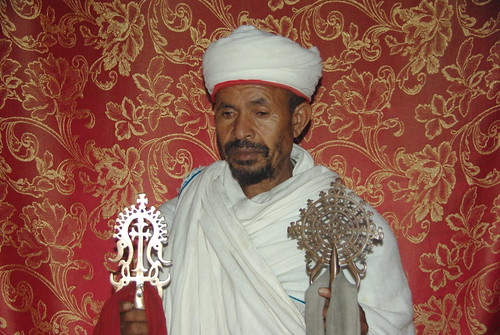
Religion: Ethiopia has it’s own brand of religion, where the practiced Christianity is far older and more closely aligned with the Old Testament. The Emperor’s of Ethiopia are believed to be descendant of King Solomon and so the familiar Star of David (that’s the Jewish Star) is literally everywhere. When walking through the churches of Lalibela the chanting of the priests made me feel as though I was touring parts of the old city of Jerusalem rather than a church. The best part was when I purchased two Stars of David and the men just referred to it as the Axium (an ancient capital city) cross.

Time: This is just downright confusing to Westerners. In Ethiopian time the day begins at 6am on our clock rather than midnight on our clock. That means that the sun rises at 11pm or 23:00. Most buses leave at midnight (6am our time) but you need to be there by 11:30. So basically you need to know that your morning bus is actually 6 hours earlier than the time written on your ticket.. Noontime is 6 and sun sets around 12. The nice thing is that the clock counts up all day long and one you’re used to it, it actually makes things easier as the entire day is AM and the entire night is PM, not that the Ethiopians actually use AM or PM to distinguish, however.

Date: Yup, they do that differently as well. They are 7 years and eight months behind us. It was 2002 the entire time we were there because their new year doesn’t come until September. (Remind anyone of Judaism?) Naturally they use differently named months and as well but the difference between the two calendars is that when the rest of the Western world switched to the Gregorian calendar in 1582, which periodically has been edited by popes for various religious purposes, the Ethiopians stuck with their Coptic (based on an Egyptian system) calendar. This means that there are 12 months of 13 days with a 13th month added every four years without exception. (You might remember we skipped a leap year in the year 2000 meaning my cousin who was born on leap year had to wait 8 years between birthdays.)
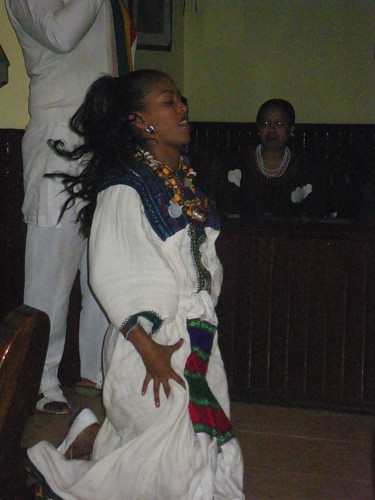
Every time we did anything here we did so with a bit of a double take. Never sure if we were right or wrong we always needed to find someone bilingual to ensure we did it right. It was confusing and it was different and that made it all part of the adventure. Having said that, if I see another injera before the 2011 I, well it won’t be pretty.

Filed Under: Africa, Ethiopia, Headline, History & Culture Tagged With: cultures, travel

Lalibela: And then we broke down

May 10, 2010 By Jillian

Although we had a nice time in Lalibela, we had some more visa processing to do in Addis so we had to rush away. Perhaps we didn’t tip the priests enough for those pictures, because not more than an hour outside of Lalibela, trucking through the valley before heading back up the escarpment, the Land Rover (Landy or Kaspuuurr as it’s affectionately called) stopped. Climbing out of the car, we popped the hood as the local children swarmed us. With a mix of curiosity and fear, the obviously destitute children approached the car. We greeted them in the little Amaharic we know and with big smiles, but they were more intrigued by the land rover than by us.

Diagnosing the problem after an hour or more of tinkering with everything in the engine, it was decided that Ally and I would hitch back into town on the next vehicle that passed, get to a garage and try to get a mechanic or tow truck back to the boys and the Landy. Easier said than done.

Four hours later, Ally and I had negotiated with the mechanic in Amharic, filled up his motorbike, sent him on his way to help the boys and the Landy, climbed in an out of a steep ravine and been eyeballed by several local men who came to the garage for the express purpose of looking at the “faranji” women. Meanwhile back at the Landy, Danny and Campbell had determined it was the fuel pump and attempted to pump the gas through the system using the air mattress pump.  As you can see from the picture, that didn’t go so well.  When that failed they worked to turn the car so it was pointed downhill, got it stuck perpendicular to the road, and when they weren’t strong enough to push Danny harnessed himself in as if rappelling and used his body weight against a small ledge to try and pull the car back into place…eventually a truck came and 5 men helped accomplish that job quickly and it was only a short time more until the mechanic we had sent arrived.

All in a days work.

The mechanic thankfully understood the problem and between the guys they rigged the engine to run off a fuel from a jerry can to get it back to Lalibela. The only remaining problem was that the jerry can had to be held on the hood of the car for the 35km trip back to Lalibela…so one of the mechanics sat on the hood the whole time and held it in place.

It would be a couple of days before we could get out, get the needed fuel pump, get back to Lalibela, perform the repairs, and drive off.

As everything transpired, the group of children watching the show grew and grew. They even helped the boys push the car (to no avail) and graciously accepted a few cookies as a thank you. They watched closely every time a door opened and ran around the car to check out what was inside. Their curiosity helped to make for a rather amusing breakdown.

Filed Under: Africa, Ethiopia, Headline Tagged With: transportation, travel

Country Guide: Argentina

May 5, 2010 By Danny

IMGP2855Argentina is a huge country with a plethora of things to do. Buenos Aires itself offers everything you might expect from a large, European city and serves as a wonderful gateway to the rest of the country. Iguazu Falls and the surrounding rainforests in the north, desert canyons in the northwest, wine in the center and the glaciers of the south ensure that there is something for all tastes. The fact that the Andes run the entire length of the country just adds to the splendor.

ESSENTIALS:

Budget: Argentina represents an incredible compromise between modern comforts and 3rd world pricing. One traveler described it as a 1st world country with 3rd world prices and although I don’t think that’s quite the case, some wealthy travelers may feel that way. Other places in South America (everything but Brazil and Chile) are much cheaper than Argentina but lack its charm and comfort. Truthfully I think there is something here for every budget, from $9/night dorm beds to $900 luxury hotels. ATMs are plentiful and changing money should never be a problem. As always, local restaurants are always cheaper than ones geared up for tourism.

Transportation: If you are spending a long time in Argentina you might find that renting a car can be an economical decision. For the two of us we couldn’t make the arithmetic pan out for the month or so we spent there but for a larger group, renting, or more time, buying used, will probably work in your favor.

That being said the bus system here is superb with plenty of comfortable options. Regular coach buses don’t exist, the worst you’ll be likely to find is semi-cama service which is like a standard coach but with more leg room and comfortable leg/foot rests. Cama is similar but with larger seat, only three to a row and then there is the executive/deluxe service which is comparable flying first class on an international airline. All classes generally include food and there is a 50% chance of the Hollywood movie being shown in English rather than Spanish. When covering large distances traveling by night may be your only option…so relax and enjoy the experience.

Planning: The seasons should play into your plan. If you are visiting in the winter months (May-Aug) then Patagonia and the far south are probably out of the question. A loop of the country can be done quite simply but be sure to allot plenty of time.

Buenos Aires: There is a lot to do here if your interested. Weekend markets abound and all are very close to one of the two main ice cream parlors. Museums, tango, nice meals, and historical hot spots are literally all over the place. If you’re in for the tourist thing, be sure to check out Florida Street, otherwise just spend some time mozying around and see what you find. Note that if flying into Buenos Aires there are two airports, one for international flights and one for domestic flights.

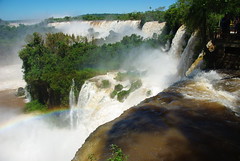
IMGP4999Igauzu Falls: Truly magnificent. Especially magnificent when the water is high and you can’t see everything. If the water is low, you can walk out across the water, which itself is a cool experience. If you don’t feel like walking into Brazil for the opposite view, don’t worry, everyone we met agreed that Argentina had the better view. Getting there might be a good reason to use an airplane but if going by bus Resitencia and the Chaco National Park can make a nice stopping point if coming or going to Salta in the northwest or even Buenos Aires and Cordoba.

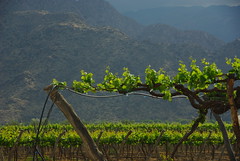
IMGP5268North West: This land is beautiful. Go for a hike in the canyonlands of Juijui, go for a bike tour of the wine-lands of Cafayate, eat empenadas in Salta, or hit the river for some whitewater. Whatever you choose Salta is likely going to be your starting point for exploration in the area. Bus transportation to some of these smaller destinations can be difficult so if your short on time consider booking a Salta based tour or renting a car locally for a few days. This makes an excellent region for multi-day cycling but be sure to bring lots of sunscreen and water.

Cordoba: The best example of a Spanish colonial town, full of charm and history, in all of Argentina. Also the home of Che Guevarra. We decided to skip as we’d had our fill of colonial architecture already but if you’re looking for more this is the best place to go.

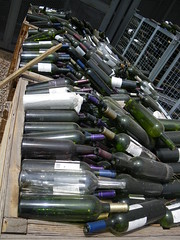
IMGP3004Mendoza: This wine producing region is a must see for many people, but I beg to differ. You can have a lot of fun riding around on a bicycle here sampling the wine but you might be surprised to note that a taste will often cost you 3 times what you’d pay for the bottle in the store not to mention the wines along the bike route aren’t exactly known for their excellence. That being said, you can have a lot of fun doing this if you’re with the right group of people and have the right attitude. There is also some class II-III whitewater in the area, but be sure to inquire about the river levels as they were a bit low when we were there.

San Juan: This is the jumping off point for tours to see Ischigualasto which features several interesting rock formations. This might be a must see if you’re a student of geology but if you aren’t you may find that the effort and money spent getting to the park may make the trip not worth it. You will be able to book tours from both San Juan and the park’s gateway towns but San Juan will charge you more in the end.

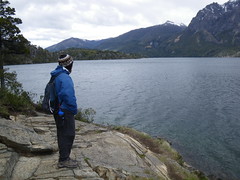
IMGP3134The Lake District: Bariloche is your main option here, filled with chocolate and coffee shops be prepared to enjoy this little taste of European dessert alongside the more traditional alfajore. The town is great place to practice kite-surfing or windsurfing on the lake, go for a day or multi-day hike, hit the trails with a nice mountain bike, or just take in the scenery. This is a paradise for the outdoor enthusiast and in the winter it is even a ski town. Prices here can run a bit high but deals can be had if you shop around a bit. San Martin is probably your other option and is generally considered to be an upmarket, and less crowded alternative.

IMGP6020

Patagonia: There is a reason a clothing company calls themselves Patagonia…this is a foreboding, windswept, uninviting place. The trip south from Bariloche to the southern end of the continent is a long one and there are two ways to do it: go back toward the coast and down along the main road (boring) or with a tour along Ruta 40 through the Andes. If you take the Ruta 40 option you will cross into Chile in a few places and you will see beautiful scenery but don’t be fooled, most of your time will be spent in the car. These trips do not begin until mid-November and usually run until around March.

IMGP3134El Calafate: The reason to go here is to visit the Perito Moreno Glacier and possibly El Chaten as well. El Calafate is a tourist town and only is open in the summertime. Once in town it is simple to arrange for a tour to the glacier but if you are with a group of 4 or more people you can save a few dollars on entrance by taking a taxi or a car rental into the park before the gate is open. The glacier itself is rather impressive and if this is your only sighting of one you will probably enjoy the boat ride to get closer as well. Adventure treks on the glacier are available as well but can be costly. Be advised that one trekker said it felt as though they were just walking on snow. You can also fly between Calafate and Bariloche with several airlines for about double the price of two days spent in the bus going via the coast and Rio Gallegos. It is very simple affair to hop on a bus here in Calafate for the ride to the Chillean Tierra del Fuego

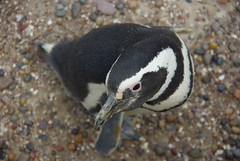
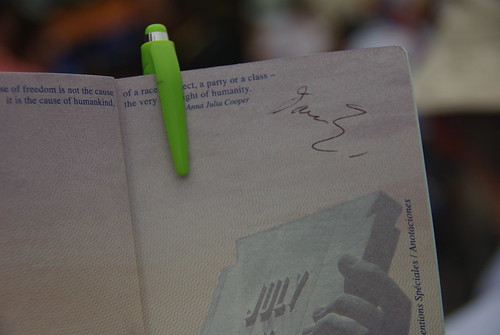
Ushuaia: If you’re looking to go to Ushuaia its likely for one of two reasons: bragging rights or a cruise to Antarctica. Either way you won’t find much there besides a place to have your passport stamped with the words fin del mundo but save your money on Penguin viewing for Punta Tombo near Peninsula Valdez.

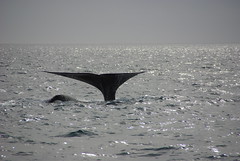
IMGP6384Peninsula Valdez: This is the oceanographer’s dream. Guaranteed sightings of the Southern Right Whale, beautiful scenery filled with elephant seals and sea lions, and the chance to see an Orca Whale swim up on the beach as part of a wave and snatch one up for the kill. Take a day to head down to Punta Tombo for more penguins walking around you than you would have ever thought possible.

Filed Under: Argentina, Featured, Guides, South America, Travel & Planning Tagged With: countryguide, patagonia, travel

Being Different

May 4, 2010 By Jillian

“You, You, You, You, You, YOU,” the children shouted at us. Putting their hands out for money it continues-“Faranji, You, Faranji!”

You’ve heard gringo and perhaps even muzungu, but have you ever heard of a Faranji? Faranji is the Amharic (Ethiopian) word for white man, and without a doubt it is the first Amharic word a traveler learns in Ethiopia. Everywhere we go we’re followed by the word, hardly can we take a step without someone screaming faranji at us and shoving an open palm or a small child in our face.

We’ve written a lot on this blog about the world being “same, same, but different,” and often we’re just focused on the similarities. It’s much easier for travelers on a minibus crowded with locals to think that they are “normal” just like the locals instead of the wealthy, western traveler. Let’s face it, if you can take time off of work to travel, well then you are more financially blessed than most of the world and yes, that makes you different. This is probably the most disturbing of all “faranji” fever experiences – the complete feeling of being unwelcomely alien. Although we’ve been in Africa for several months and usually we’re the only white people on a local bus or in a local restaurant, we’ve never felt as alien as we have here in Ethiopia. Generally people are interested in us, but we’ve never been stared at like we are in Ethiopia. Here we are different, and almost every moment we’re reminded of it. Besides the faranji stare, we’ve had children throw things at us, yell and follow us down the street, and almost every single time we purchase something we’re confronted with faranji price.

No matter how hard we try to ignore it, we are different.

There’s really only one way to deal with ”faranji”, “muzungu” or “gringo.” Humor. Entering a local watering hole the other day in Harar we were greeted by the faranji stare. Smiling at everyone as I took a seat, I turned to the man next to me, who was curiously staring, put my hand out and said “faranji”. He belly laughed and told me his name before turning back to his friends, where from what I can tell he recounted our meeting with a big smile and laugh. Offering Danny some of his meal (did I mention it was kitfo– raw meat?), a special gesture of friendship here in Ethiopia, the man laughed and smiled even as Danny politely refused. Shaking our hands in a traditional way that conveys respect as he left, we smiled knowing that although we were faranji’s we were the same in a place that we’ve felt so different.

Filed Under: Africa, Ethiopia Tagged With: being different, cultures, travel

African Visa Guide

April 21, 2010 By Jillian

IMGP5266Although we needed only two visas for all of Latin America, we’ve needed a visa for almost every country we’ve gone to in Africa.  Some countries are straight forward, but others make the process a virtual nightmare and seem to change their requirements every other day.  In an effort to help other traveling souls out there, here’s our guide to African Visas.  All requirements are for American passports unless otherwise noted and were as of our travels December 2009- April 2010.

South Africa – 90 day multiple-entry tourist visa upon arrival at all land borders and airports.  1/2 page sticker with a barcode.  Free!

Swaziland, Lesotho and Namibia– No visa required, free entry.

IMGP3550Mozambique– Crap shoot, no seriously.  Everyone we’ve met seems to have paid a different fee for a 30 day single entry visas, with no consistency among borders, passports, etc…We paid $60 for Mozambique 30 day single entry visas in Argentina.  Traveled with people who bought them at the land border near Maputo for $25.  Single entry visa at the Mozambique embassy in Harare was $130, although we picked our second ones up at the Zim/Mozambique border for $30.  The process was long and we were harassed upon exit in the north for not getting it before hand.  If you’re coming via land from south africa you’re fine to get it at the border, other land borders may be a crap shoot. Can pay in Rand, USD or Meticais.

Zimbabwe– $45 single entry visa upon arrival at land border.  No problem obtaining the visa, process was straightforward.  Can pay in Rand or USD only.

Malawi– Free tourist visa upon arrival.  Straightforward and easy.

IMGP9223Tanzania– Can obtain at some land borders- check in advance.  Recently increased the price for American passports to $100 6 month multiple entry.  Some Americans receive a one year multiple entry for $100 at the Tanzania/Kenya border crossings.  We had to get ours in advance in Zimbabwe (only waited 2 hours) as they were not available at the Tanzania/Malawi border when we crossed.  As far as we know for all other nationalities, the tourist visa is $50.  Pay in USD, but must have post 2006 bills.  Tanzanian Government offices will put up a huge fight if you have pre-2006 bills and you might not get through.  Full page sticker or stamp.

Kenya– Obtain at all land borders.  $25 visa that says single entry- but actually is good for multiple entry as long as you don’t go outside of Uganda, Tanzania or Kenya.  Full page sticker.

Uganda– $50 for all nationalities, two month single entry available at the border. Again post 2006 bills only.   No $20 student visa is available to non- East Africans.

Ethiopia– Obtain at Addis Ababa airport for $20 all nationalities.  Not available at ANY land borders, must arrange in advance.  $20 in advance for all nationalities except Americans- $70 in advance. 24 hour processing.

IMGP1883Sudan– It’s very difficult to get a tourist visa for Sudan. Most travelers get a transit visa in either Cairo or Addis Ababa.  This is processed within 24 hours and gives the bearer 2 weeks to transit Sudan.  It’s 100USD for everyone, except Americans, who pay 200USD.  Before you apply you’ll need to have a valid Egyptian or Ethiopian visa.

Egypt– Many nationalities can obtain a visa for $15 at the Airport.  We purchased ours in advance in Addis Ababa in order to get our Sudanese Visas.  10 processing days in Addis.  Visas were available on the ferry from Wadi-Halfa to Aswan.

Filed Under: Africa, Headline, Travel & Planning Tagged With: travel, visas

  • « Previous Page
  • 1
  • …
  • 7
  • 8
  • 9
  • 10
  • 11
  • …
  • 15
  • Next Page »

Connect With Us

  • Email
  • Facebook
  • Flickr
  • Pinterest
  • RSS
  • Twitter

Featured Posts

Our Bucket List
How We Travel For Free
$ Travel Tips

Recent Comments

  • Barbara on Kayaking Kauai’s Na Pali Coast
  • Lori Hubbard on Review: Eneloop Batteries and Charger
  • TK on The Trouble with Philadelphia

Banking on the Road

It can be very hard to keep track of your finances while you're on the road long-term. Be sure to check out how we took care of our finances while traveling and feel free to email us any questions you have.

Adventure Guides

Torres Del Paine
China Adventure
Uzbekistan Overland
Egyptian Odyssey
Malaria
Argentina Adventure
DIY African Safari
South Africa Guide
Bolivia by Bus
How-To African Visas

[footer_backtotop]

Copyright 2008-2015 · All Rights Reserved · Contact I Should Log Off · RSS · Partner With Us · Privacy