• Home
  • About
    • Who We are
    • Affiliates
    • Disclosures & Guidelines
    • FAQs
    • Privacy Notice
  • Funding Your Travels
    • Banking on the Road
    • Credit Cards in Our Wallet
    • Spending
  • Contact
    • Media
    • Submission Guidelines
    • Partnership Opportunities

i should log off

log off and live!

  • Travel & Planning
    • Travel Reflections
      • Good, Bad & Ugly
      • Re-Entry
    • Travel Resources
      • Travel Tips
      • Travel Bloggers
    • Reviews
      • Gear
      • Operators
      • Travel Clothing
    • Travel Gear
      • Cameras
      • Danny’s Clothes
      • Electronics
      • Health & Hygiene
      • Jillian’s Clothes
      • General Gear
  • Destinations
    • Travel Guides
    • Africa
      • Egypt
      • Ethiopia
      • Lesotho
      • Kenya
      • Malawi
      • Morocco
      • Mozambique
      • Namibia
      • South Africa
      • Sudan
      • Swaziland
      • Tanzania
      • Uganda
      • Zimbabwe
    • Asia & Oceania
      • Armenia
      • Cambodia
      • China
      • Georgia
      • India
      • Kazakhstan
      • Laos
      • Thailand
      • Turkey
      • Uzbekistan
      • Vietnam
    • Caribbean
      • Antigua
      • Cuba
      • Jamaica
    • Central America
      • Belize
      • Costa Rica
      • Guatemala
      • Honduras
      • Nicaragua
      • Panama
    • Europe
      • Armenia
      • Austria
      • Belgium
      • Czech Republic
      • France
      • Georgia
      • Germany
      • Hungary
      • Italy
      • Spain
      • Turkey
    • North America
      • Canada
      • Mexico
      • USA
    • Middle East
      • Egypt
      • Israel
      • Jordan
      • Oman
      • Turkey
    • South America
      • Argentina
      • Brazil
      • Bolivia
      • Chile
      • Colombia
      • Ecuador
      • Peru
      • Uruguay
  • Weekend Adventures
    • Cycle
      • Pastimes
        • Beer & Wine
        • Books
        • Cooking
        • History & Culture
    • Dive & Snorkel
    • Hike
    • Trek
    • Whitewater
  • Photos
    • Photo of the Day
  • Family Travel
You are here: Home / Archives for Destinations / Africa

Foodie Friday- Injera

April 30, 2010 By Jillian

You would be right to be angry with us if our first Ethiopian foodie Friday wasn’t injera. Like most of Africa, Ethiopian’s traditionally eat with their hands, which presents a problem when eating… well many things. In the tradition of n’sima and chapati, the Ethiopians developed their own method of getting that stew down the hatch- injera.
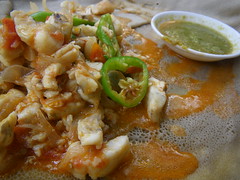
Pancake like, soft and spongy, injera is made from sograham or teff. It’s texture is not unlike a crepe, but more spongy on one side. Unlike n’sima or chapati, injera has its own flavor, which is rather sour. It compliments well with traditional berbere spiced food such as dole wat (a chicken stew) and tibs (meat cooked with onions and peppers), but it certainly isn’t something you’d want to snack on alone. In case you aren’t familiar with berebere spice, I’ll just tell you what our friend Campbell says “it is as hot coming out as it was going in.” Berebere is seriously hot and be forewarned, its been known to give some…well intestinal difficulties. Fortunately or unfortunately, berebere spice seems to be one of the main ingredients in almost every dish here. Even pasta.

Typically meals are served communality on a big plate of injera. After ordering a pitcher of water is brought to the table, or in some of the more cheaper places a wash basin is pointed to. You wash your hands and return to the table, without touching anything else. Once the food arrives, the proper way to eat is rip off a piece of iinjera, roll it into a ball and dip it in the stew. Oh and did I mention only with your right hand? Traditionally the left hand is used for err….the call of nature leaving the right hand as the only appropriate hand to eat or pass things.

Spicy thick stewed meats are traditionally served with with iinjera, which can be seriously spicy here, prompting you to shove more iinjera in your mouth. You can see where this kind of circle goes. Soon enough the stew is gone and you’re sitting with a dish of soggy berebere soaked injera. After the meal its traditional to wash your hands again and return to the table.

Living in DC, we were familiar with Ethiopian food before embarking on our journey. It seems that most people in Addis Ababa know of DC’s food scene (or at least its Ethiopian food scene) and several times we’ve been asked if we’ve been to the Ethiopian restaurant on 18th street. Sitting in a waiting room, we met an older Ethiopian man who not only knows DC, but told us that the Ethiopian restaurant on 18th street is his favorite, but that the Georgetown one is overpriced. Ironic to be so far from home discussing the merits of our local Ethiopian restaurants!
Filed Under: Africa, Ethiopia, Food, Headline Tagged With: foodiefriday, spice

Faranji Pricing

April 28, 2010 By Jillian

I wish I could say that its uncommon for foreigners or tourists to be charged differently. All over the world people seem willing to take advantage of the newcomer, to see what boundary can be pushed, but never have we seen a tourist price so institutionalized.

IMGP4608Faranji pricing in Ethiopia is a way of business. While gringo pricing is common in Latin America, is generally understood that its a “starting” price from which to negotiate and almost no one will admit to a separate gringo price. That is just not the case in Ethiopia and often we’ve been presented with a bill that is different from what we expected. “Faranji price,” we’re told, as a matter of fact, expecting us to understand. Nothing frustrates us more than being charged differently because of the color of our skin or our nationality.

Recently we sat at an Internet cafe for a few hours, trying to catch up with some online administration. Although the price was set at .35Birr cents (about $0.05) per minute, when it came time to pay, we were charged .75 Birr cents a minute. Protesting the increase, we were told simply that .75 was the faranji price. Refusing to pay what we saw as an unfair increase due to our skin color, we argued that the practice of faranji pricing was unfair. “That’s how it is,” the cafe attendant said. In the end we refused to back down and after extensive discussions paid original rate.

What is right though? Should we act on a ‘when in Rome’ mentality and pay what is asked of us for should we stand up for the principles of equality and fair play that we grew up in and enforce in our own country? We’ll posted a new poll to this affect and are curious about your thoughts.

Filed Under: Africa, Ethiopia, Headline Tagged With: cultures, money

Addis Ababa

April 26, 2010 By Danny

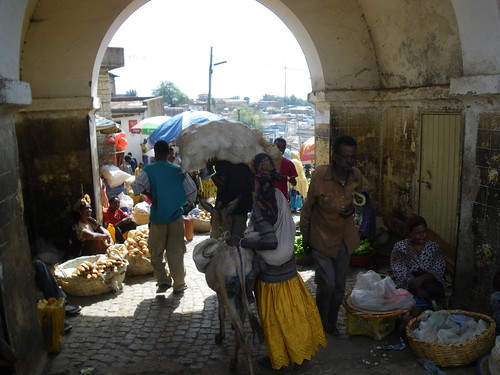
This is probably the most African city in Africa. It is big and loud. Sidewalks run incomplete into beautiful buildings. It is among the 5 largest cities on the continent yet there is a donkey that eats grass out of the road median near our hotel and today we had to walk around a flock of sheep being herded the opposite direction. It is where the Africa of old meets the Africa of new.

Addis is unique in Africa for the same reason Ethiopia is unique in Africa. Ethiopia is the only country in Africa never to have been conquered or colonized. Every other country we’ve been to on this trip, including our own USA, is a country born from colonization. This lack of European influence (save Mussolini’s occupation during World War II) has yielded a country that can say it is wholly African. As a result, Addis Ababa, the capital city, is the only one on the continent free of European history and thus serves as a beacon for the rest of the continent, as the center of African diplomacy.

This role as the diplomatic center of Africa gives Addis Ababa its modern edge. It is the reason Addis is home to one hotel (a Sheraton) rumored to be one of the nicest in the world, with a night in a villa starting at $12,000. It is the reason every country we’ve ever heard of has an embassy here. It is the reason I was just able to enjoy good ice cream with chocolate cake for the first time months.

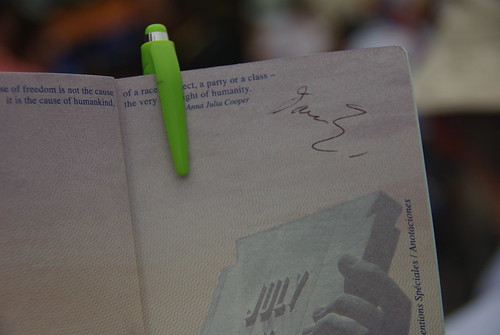
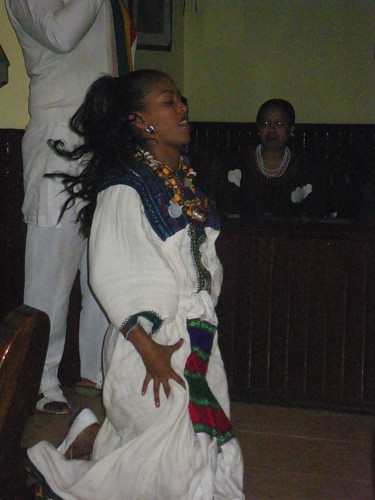
We’ve had a lot of time to pass here in Addis, waiting for visas to Egypt and then to Sudan so that we can complete the remainder of our trip. It is the first time, in over a year of travel, that we’ve set foot inside a US Embassy (to get additional passport pages) and I can honestly say I was never so happy to see a photo of Hilary Clinton in my life. We saw a copy of the famous ‘Lucy’ skeleton, ate a lot of Ethiopian food, and even watching Ethiopian dancing. This is a nice city, a real city, but it still doesn’t make me want to spend more time on the continent.

Filed Under: Africa, Ethiopia, Headline Tagged With: capitals, cities

Foodie Friday- Tamarind Juice

April 23, 2010 By Jillian

A taste of East Africa isn’t complete without tamarind juice. Endemic to tropical African zones, such as the swahili coast, tamarind is the pod-like fruit of a bushy dense tree, that frankly looks completely unappetizing to eat. Fortunately, tamarinds are pressed into juice so you don’t have to look at it to enjoy its flavor.

We first enjoyed tamarind juice in Lamu and couldn’t decide what it was. The flavor was something akin to a tart iced tea and we thought perhaps it was a pre-made mix. It was both sweet and sour. Over the next few days we were served it again and again and finally discovered that it wasn’t a mix at all, but the crushed pulpy juice of this rather exotic fruit.

Not to sound like a broken record, but tamarind is actually found all over southeast Asia and you guess it – was centuries ago traded by Indian Ocean traders. Unlike the chapati or so many other things we’ve found in East Africa, tamarind is actually endemic to Africa! Finally something truly African.

Although the taste is sweet and sour, which is sort of unique in a drink, the fruit is actually very high in nutrients, including calcium. Watch out if you want to enjoy it though, tamarind pulp is considered a natural laxative, something that I think most travelers are most certainly not looking for!

Filed Under: Africa, Food, Headline, Kenya Tagged With: drinks, foodiefriday

African Visa Guide

April 21, 2010 By Jillian

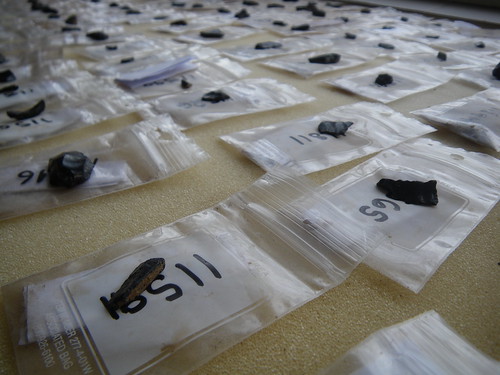
IMGP5266Although we needed only two visas for all of Latin America, we’ve needed a visa for almost every country we’ve gone to in Africa.  Some countries are straight forward, but others make the process a virtual nightmare and seem to change their requirements every other day.  In an effort to help other traveling souls out there, here’s our guide to African Visas.  All requirements are for American passports unless otherwise noted and were as of our travels December 2009- April 2010.

South Africa – 90 day multiple-entry tourist visa upon arrival at all land borders and airports.  1/2 page sticker with a barcode.  Free!

Swaziland, Lesotho and Namibia– No visa required, free entry.

IMGP3550Mozambique– Crap shoot, no seriously.  Everyone we’ve met seems to have paid a different fee for a 30 day single entry visas, with no consistency among borders, passports, etc…We paid $60 for Mozambique 30 day single entry visas in Argentina.  Traveled with people who bought them at the land border near Maputo for $25.  Single entry visa at the Mozambique embassy in Harare was $130, although we picked our second ones up at the Zim/Mozambique border for $30.  The process was long and we were harassed upon exit in the north for not getting it before hand.  If you’re coming via land from south africa you’re fine to get it at the border, other land borders may be a crap shoot. Can pay in Rand, USD or Meticais.

Zimbabwe– $45 single entry visa upon arrival at land border.  No problem obtaining the visa, process was straightforward.  Can pay in Rand or USD only.

Malawi– Free tourist visa upon arrival.  Straightforward and easy.

IMGP9223Tanzania– Can obtain at some land borders- check in advance.  Recently increased the price for American passports to $100 6 month multiple entry.  Some Americans receive a one year multiple entry for $100 at the Tanzania/Kenya border crossings.  We had to get ours in advance in Zimbabwe (only waited 2 hours) as they were not available at the Tanzania/Malawi border when we crossed.  As far as we know for all other nationalities, the tourist visa is $50.  Pay in USD, but must have post 2006 bills.  Tanzanian Government offices will put up a huge fight if you have pre-2006 bills and you might not get through.  Full page sticker or stamp.

Kenya– Obtain at all land borders.  $25 visa that says single entry- but actually is good for multiple entry as long as you don’t go outside of Uganda, Tanzania or Kenya.  Full page sticker.

Uganda– $50 for all nationalities, two month single entry available at the border. Again post 2006 bills only.   No $20 student visa is available to non- East Africans.

Ethiopia– Obtain at Addis Ababa airport for $20 all nationalities.  Not available at ANY land borders, must arrange in advance.  $20 in advance for all nationalities except Americans- $70 in advance. 24 hour processing.

IMGP1883Sudan– It’s very difficult to get a tourist visa for Sudan. Most travelers get a transit visa in either Cairo or Addis Ababa.  This is processed within 24 hours and gives the bearer 2 weeks to transit Sudan.  It’s 100USD for everyone, except Americans, who pay 200USD.  Before you apply you’ll need to have a valid Egyptian or Ethiopian visa.

Egypt– Many nationalities can obtain a visa for $15 at the Airport.  We purchased ours in advance in Addis Ababa in order to get our Sudanese Visas.  10 processing days in Addis.  Visas were available on the ferry from Wadi-Halfa to Aswan.

Filed Under: Africa, Headline, Travel & Planning Tagged With: travel, visas

  • « Previous Page
  • 1
  • …
  • 6
  • 7
  • 8
  • 9
  • 10
  • …
  • 24
  • Next Page »

Connect With Us

  • Email
  • Facebook
  • Flickr
  • Pinterest
  • RSS
  • Twitter

Featured Posts

Our Bucket List
How We Travel For Free
$ Travel Tips

Recent Comments

  • Barbara on Kayaking Kauai’s Na Pali Coast
  • Lori Hubbard on Review: Eneloop Batteries and Charger
  • TK on The Trouble with Philadelphia

Banking on the Road

It can be very hard to keep track of your finances while you're on the road long-term. Be sure to check out how we took care of our finances while traveling and feel free to email us any questions you have.

Adventure Guides

Torres Del Paine
China Adventure
Uzbekistan Overland
Egyptian Odyssey
Malaria
Argentina Adventure
DIY African Safari
South Africa Guide
Bolivia by Bus
How-To African Visas

[footer_backtotop]

Copyright 2008-2015 · All Rights Reserved · Contact I Should Log Off · RSS · Partner With Us · Privacy