• Home
  • About
    • Who We are
    • Affiliates
    • Disclosures & Guidelines
    • FAQs
    • Privacy Notice
  • Funding Your Travels
    • Banking on the Road
    • Credit Cards in Our Wallet
    • Spending
  • Contact
    • Media
    • Submission Guidelines
    • Partnership Opportunities

i should log off

log off and live!

  • Travel & Planning
    • Travel Reflections
      • Good, Bad & Ugly
      • Re-Entry
    • Travel Resources
      • Travel Tips
      • Travel Bloggers
    • Reviews
      • Gear
      • Operators
      • Travel Clothing
    • Travel Gear
      • Cameras
      • Danny’s Clothes
      • Electronics
      • Health & Hygiene
      • Jillian’s Clothes
      • General Gear
  • Destinations
    • Travel Guides
    • Africa
      • Egypt
      • Ethiopia
      • Lesotho
      • Kenya
      • Malawi
      • Morocco
      • Mozambique
      • Namibia
      • South Africa
      • Sudan
      • Swaziland
      • Tanzania
      • Uganda
      • Zimbabwe
    • Asia & Oceania
      • Armenia
      • Cambodia
      • China
      • Georgia
      • India
      • Kazakhstan
      • Laos
      • Thailand
      • Turkey
      • Uzbekistan
      • Vietnam
    • Caribbean
      • Antigua
      • Cuba
      • Jamaica
    • Central America
      • Belize
      • Costa Rica
      • Guatemala
      • Honduras
      • Nicaragua
      • Panama
    • Europe
      • Armenia
      • Austria
      • Belgium
      • Czech Republic
      • France
      • Georgia
      • Germany
      • Hungary
      • Italy
      • Spain
      • Turkey
    • North America
      • Canada
      • Mexico
      • USA
    • Middle East
      • Egypt
      • Israel
      • Jordan
      • Oman
      • Turkey
    • South America
      • Argentina
      • Brazil
      • Bolivia
      • Chile
      • Colombia
      • Ecuador
      • Peru
      • Uruguay
  • Weekend Adventures
    • Cycle
      • Pastimes
        • Beer & Wine
        • Books
        • Cooking
        • History & Culture
    • Dive & Snorkel
    • Hike
    • Trek
    • Whitewater
  • Photos
    • Photo of the Day
  • Family Travel
You are here: Home / Archives for Destinations / Africa / South Africa

Conserving Resources

February 10, 2010 By Jillian

In December the world’s nations got together in Copenhagen to discuss climate change and overwhelmingly the summit seems to be seen as a failure on the part of the developed nations to make significant strides forward in combating climate change. Unfortunately it’s not the wealthy nations of the world that fare the worst in dealing with the effects of climate change- sure maybe winter in Washington, DC is a little worse this year, but compared to the desertification of land around the equator, a few extra inches of snow isn’t such a big deal.

One day the effects of global climate change will effect wealthy countries, one day our natural resources may become so scare that they aren’t available. Take for example the situation along South Africa’s garden route. A popular vacation area, this gorgeous coastline is on the front lines. Friendly signs on light posts remind residents that the area is in a water scarcity. The smiling rain drop doesn’t really convey the problem though- the dam is down from about 90% year under 20% this year..and given what the bottom of a pot of coffee looks like who knows how good that remaining water is. On account of the drastic shortage, the municipality has sent notices asking residents to curb their water usage while simultaneously imposing a drastic monthly water limit on each home.

Residents of George and the surrounding area have turned to the sky for their answer, literally. Capturing rainwater from their gutters in water tanks, many households have cut themselves from municipal water usage completely. Piping rain water through their sinks, toilets and showers, people have learned to monitor their usage (and the weather!) closely. Running the dishwasher when completely full is only the beginning as residents have become creative, capturing the cold water from the shower head before it gets hot and using that water to flush toilets and water landscaping…not to mention turning the water off completely as they soap up their bodies.

Remarkably, the people who have switched to rainwater are the people who could best absorb the price increase. They haven’t taken these measures to save money, they’ve done it because they believe it’s their responsibility to use a little less so that others may still have. Spending five days at the home of friends who successfully transferred to rainwater in December made me really think about my resource usage. At home where water, electricity, food and fuel are cheap and plentiful it’s sometimes hard to grasp the impact running the tap for a few minutes may have, but those precious liters from the tap might not be available elsewhere.

Going Green has been a popular movement in the United States for some time now. Due to the economic recession many people have become more aware of limited resources, but when the economy improves will we resort to our old habits? Let’s hope not, for it may not be a drought that effects us, but somewhere somehow global climate change will affect each and everyone of us. Individually making small changes will make a significant impact, so let’s take a page from the residents of George and do our part.

Filed Under: Africa, Headline, South Africa Tagged With: environment, impact, resources, tourism, traveling

The Garden Route

February 9, 2010 By Danny

The Garden Route is a seemingly mythical stretch of coastline in South Africa stretching about 400 miles from Cape Town east along the Indian Ocean. This stretch is known as a surfer’s paradise offering bay after bay of relatively warm waters abutting sleepy seaside towns where ones biggest worry is when to sleep. But since we don’t surf and I happen to be from South Florida, which makes me a spoiled little brat when it comes to all these world class beaches we keep coming across, we skipped most of the Garden Route.

The one big Garden Route activity we were sure not to miss was the Tsitsikamma National Park. As we hadn’t arranged to hike the five day Otter trail in advance in Tsitsikamma NP we were only able to spend a night there gazing at the stars, watching seals and dolphins, and hiking along some of the most stunningly violent coastline we’d ever seen.

A trip inland from the Garden Route to the Cango Caves yielded us one of the best spelunking experiences possible. These caves are hundreds of thousands of years old and are amongst the biggest in the world. The most amazing part is that they are still growing and as a result the vast majority of the known cave system is still unexplored. The reason that this tour was so wonderful was that there was an adventure option where we were able to go deeper and crawl through small little spaces, getting our clothes snagged and making us wish we’d skipped that last cookie. It was quite a workout and gave us a profound respect for the people who actually do explore caves rather than just take tours (that would be us) of big caverns. Sure swimming through the caves in Guatemala was probably more memorable but this was still pretty darn cool.

After the caves we went to the ostrich farm, although you’ll have to wait till tomorrow to see those videos.

It was in George where we most enjoyed the Garden Route while making good on an invitation we received while in Bariloche, Argentina. While we were with them we were welcomed in as one of their own, joining them on the morning bike ride, for a picnic at the beach which included ocean surfing kayaks, visiting the local market, and grilling at the local park. The most important thing we did however, was debating the merits of the peanut butter and jelly sandwich against the peanut butter and syrup sandwich…

Despite beginning the weekend with a hurt foot, (I’d had a plantar’s wart removed the day prior) banging my nose with a paddle (everyone agreed that it was actually Jill beating me) while surfing, and having a poisonous (we’re not sure so we decided it must be poisonous) snake swim toward us while we were paddling in the river, we had an absolutely wonderful time. Its times like these that we most value at this point in our travel. Not because these are things we could never have done on our own but because these are the experiences which leave us the fondest memories possible of a place. Its also good to feel at “home” once in awhile too!

Filed Under: Africa, Headline, South Africa Tagged With: home, people, traveling

More Elephants…

February 8, 2010 By Jillian

We knew we’d spend a good portion of our time in South Africa game viewing at the national and provincial parks , after all it’s not exactly common to see a lion hunt in downtown D.C. (well depending on your profession maybe it is!). First through Kruger, than the parks in Swaziland, Huhuilwe-iMfolozi and finally we hit what many consider to be South Africa’s hidden gem- Addo Elephant Park.

Ever since the “elephant incident” at Kruger I’ve been dreading Addo Elephant Park. A park dedicated to elephant sent visions of being crushed by these gentle giants through my head, and well I was hoping that having two other people in the car might persuade my darling husband to re-evaluate the actual distance of 30 meters. That was until we sat near a waterhole, watching water buffalo, ostrich, zebra and finally two elephants come for a drink. Not only did the elephants approach the watering hole passing less than 10 meters from our car, but they as well as everyone else in the car seemed completely unfazed by our proximity…Except of course, me. “Now I see why you’re not allowed to drive in the game parks,” pipped up our friend in the back. “I’m calm,” I replied, willing myself to relax a little.

In the heat of summer most of the waterholes have gone dry so its easy to find the animals at Addo- just go to the water. Advised by other travelers to just go to a watering hole and let the animals come to us, we spent the morning watching small family groups of zebra, ostrich, jackal, buffalo, warthog and elephant come and go. Addo might be known for its huge elephant population, said to be the densest in Africa, but we spent the morning watching a menagerie of African animal parade before us, even spotting four lions lounging in the shade.

After a decade in Washington, D.C. there was one watering hole we had to go to, no matter what may or may not be there– Marion Baree water hole. I’m sure the watering hole is named for a very respectable, very worthy person, but the irony of the pronunciation- the same as the infamous Washington, D.C. Mayor was too much.

Almost everything hides in the heat of the African sun, but as we came around the corner to visit our beloved former mayor, my jaw dropped. A breeding herd of about thirty elephants including several very young calves crowded around the hole drinking, splashing and playing about in the water. Speechless the four of us stared out the window for what seemed like forever, watching the elephants trumpet and splash each other. We’ve had some pretty incredible wildlife experiences over the last six weeks, but this is a memory even I do not want to forget.

Addo Elephant Park is so named for the herd of over 450 elephant in the park, but most of the elephants were hanging out in the inaccessible portions of the park. Still, it was an incredible day, and as we sipped wine watching sundown over a watering hole filled with both lions and kudu, I finally began to calm down. Maybe next time I should just drink a glass before we meet the elephants?

Filed Under: Africa, Headline, South Africa Tagged With: animals, encounters, nationalparks, safari

Operation Rhino

January 25, 2010 By Jillian

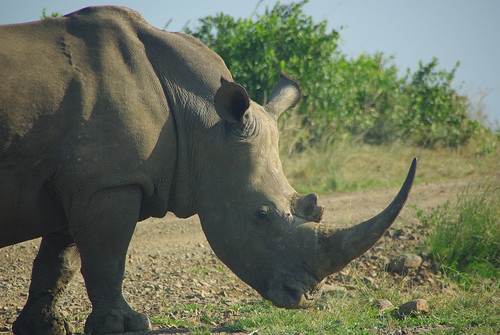
Most famous for its “Operation Rhino” program, Hluhuluwe-iMfolozi National Park is a conservation focused big game park. Home to a quarter of the world’s rhinocerous population, the park’s Operation Rhino has successfully brought the white rhino back from the brink of extinction. A little over 100 years ago only 20 white rhinos existed in the world, today the global population is closer to 13,000 with the entire world’s population originating from the conservation efforts at Hlhuluwe-Imfolozi park. That’s quite an accomplishment. The program is so successful that the park has had to move “surplus” rhinos to other big game parks across Southern Africa in order to maintain a manageable population for the park.

The story of the white rhinocerous is like the story of so many species over the years, only it appears to have a happy ending. With the white rhino population steadily rising, the park has now begun to focus its conservation efforts on the black rhino who has suffered extreme dwindling numbers due to poaching over the last decade. Estimates indicated that in the last decade the number of black rhino has fallen from 14,000 to 1550 due mainly to poaching.

Poaching, surprisingly still exists in the big game parks in South Africa. In fact, a guide at Kruger National Park told us that last year Park Rangers found the carcases of 30 poached rhinos. Like elephant poachers which only take the tusks of the animal, rhino poachers remove only the horns, which can fetch up to 10,000 USD on the international market. Although international awareness against poaching increases every year, there continues to be great demand for rhino horns which are believed to cure infertility in some cultures.

Rangers often find the remains of animals, not the poachers themselves, especially at trans-frontier parks like Kruger where poachers can enter and exit the area from different countries. A very shocking set of images at Kruger Park didn’t need captions to describe the cruelty and brutality of the snares and traps used by poachers.

With so much at stake, successful conservation programs like that at Hluhuluwe-Imfolozi will only become more and more important in the preservation of species and the enviroment. Hopefully the example set by Hluhulhwe will serve to spur serious animal conservation efforts not only in Africa with the big game, but also in our own country, to protect smaller species.

Filed Under: Africa, Headline, South Africa Tagged With: animals, conservation projects, nationalpark

Foodie Friday: Peri-Peri Chicken

January 22, 2010 By Danny

Having just spent 9 months in Latin America we consider ourselves to be something of chicken experts. For several months in Central America, if we weren’t eating chicken with our rice and beans it was because we were eating eggs with our rice and beans. So imagine our surprise here in Africa to find equally great chicken once again, but this time the chicken owes its success to the mix of cultures here in South Africa.

Although it is obvious that this country consists of people of English decent and African decent, it might be less obvious how many other cultures call South Africa home. There are the Afrikaans, descendants of the original Dutch settlers, sometimes called Boers. The Portuguese settled the country just to the north (Mozambique) placing some Iberian culinary delight to the mix. And just like up north in England, being part of the commonwealth (South Africa left the commonwealth toward the end of Apartheid) lead to large influx of Indians, with their own distinct culture and tastes.

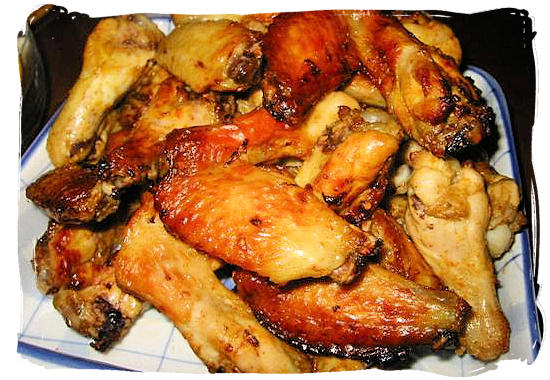
Today, the spicy chicken this mix has created, mostly on account of the piri-piri (translates as ‘hot pepper’) spice which the Portuguese settlers discovered when they arrived here in Africa, and a scent or two from Asia courtesy of the Indian influence. Mixed with some lemon, garlic, and I’m sure some other secrets, Peri-Peri chicken has been exported all over the world through a restaurant called Nando’s Peri-Peri. (There is one in DC…guess what, it’s not Peruvian!) The Peri-Peri seasoning is spicy to say the least, never disappointing, and always in need of a lot of water to help wash it down.

Filed Under: Africa, Food, Headline, Mozambique, South Africa Tagged With: foodiefriday

  • « Previous Page
  • 1
  • …
  • 3
  • 4
  • 5
  • 6
  • 7
  • 8
  • Next Page »

Connect With Us

  • Email
  • Facebook
  • Flickr
  • Pinterest
  • RSS
  • Twitter

Featured Posts

Our Bucket List
How We Travel For Free
$ Travel Tips

Recent Comments

  • Barbara on Kayaking Kauai’s Na Pali Coast
  • Lori Hubbard on Review: Eneloop Batteries and Charger
  • TK on The Trouble with Philadelphia

Banking on the Road

It can be very hard to keep track of your finances while you're on the road long-term. Be sure to check out how we took care of our finances while traveling and feel free to email us any questions you have.

Adventure Guides

Torres Del Paine
China Adventure
Uzbekistan Overland
Egyptian Odyssey
Malaria
Argentina Adventure
DIY African Safari
South Africa Guide
Bolivia by Bus
How-To African Visas

[footer_backtotop]

Copyright 2008-2015 · All Rights Reserved · Contact I Should Log Off · RSS · Partner With Us · Privacy